How Can Batch Data Processing for Large-Scale Web Scraping Simplify High-Volume Data Management?
Introduction
Modern organizations collect enormous volumes of online information to support pricing intelligence, market analysis, inventory tracking, customer behavior evaluation, and strategic planning. Managing this continuously expanding information requires an efficient processing framework that keeps datasets structured, accurate, and easy to analyze.
Instead of handling every incoming record individually, businesses often schedule large-scale processing tasks that reduce infrastructure pressure while maintaining consistency across millions of records. Organizations also combine automation with Web Scraping With AI to classify extracted information, identify anomalies, remove duplicates, and organize structured datasets for downstream analytics.
Selecting the right processing strategy depends on business goals, reporting frequency, infrastructure costs, and delivery expectations. Batch Data Processing for Large-Scale Web Scraping enables organizations to consolidate extensive datasets into manageable processing cycles while maintaining performance and reducing operational complexity. With well-designed automation, businesses improve reporting accuracy, strengthen data governance, and prepare reliable datasets that support confident decision-making across multiple industries.
Structured Operational Strategies Supporting Consistent Enterprise Data Performance
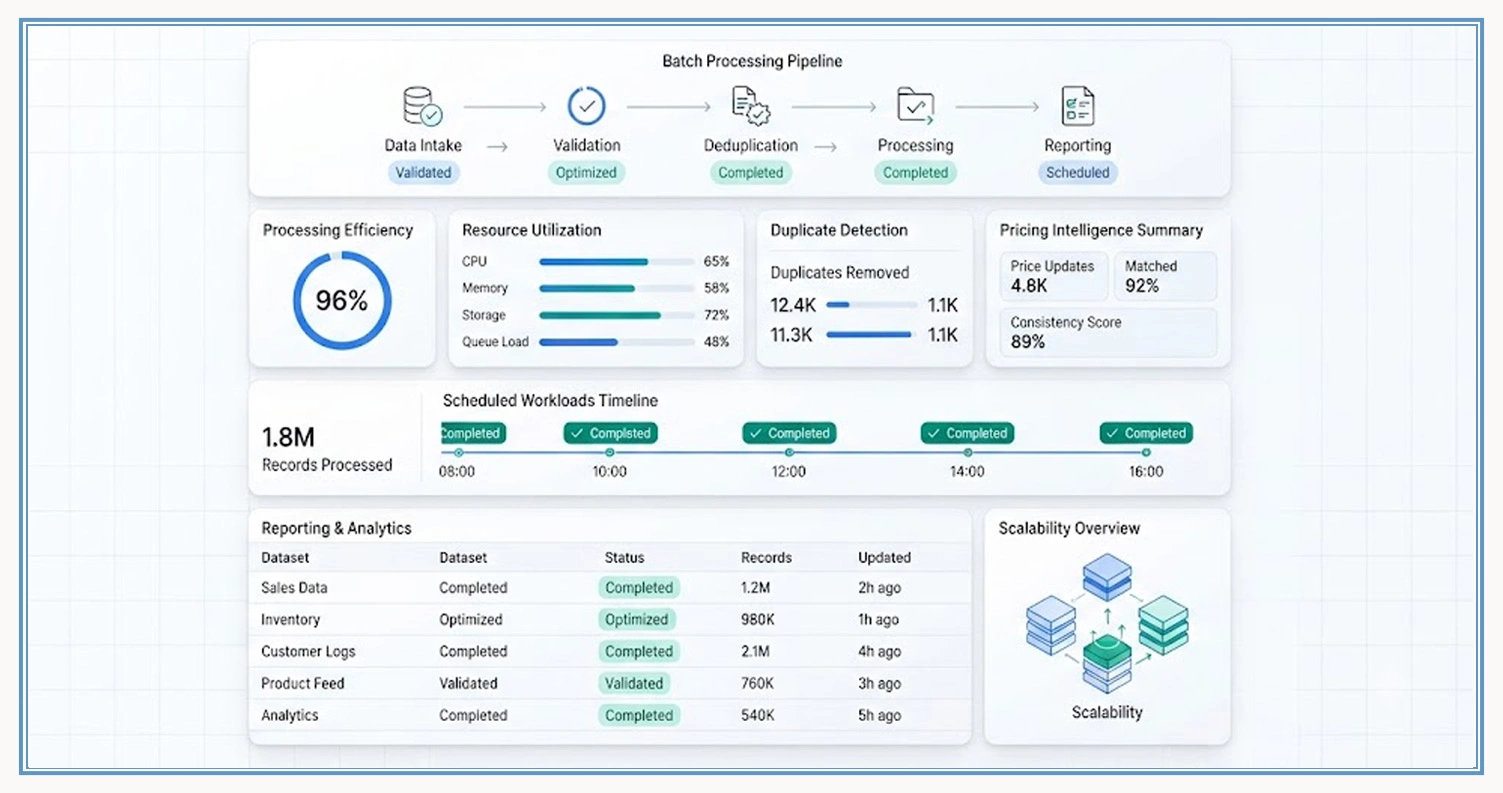
Managing high-volume datasets requires a structured operational framework that balances processing efficiency, infrastructure stability, and long-term scalability. Organizations handling millions of extracted records often struggle with inconsistent workloads, duplicate information, and unpredictable resource utilization. In many enterprise environments, automated processing has reduced operational costs by nearly 35%, allowing technical teams to focus on analytics rather than repetitive maintenance tasks.
Businesses supporting dynamic pricing operations frequently integrate Smart Repricer Service within broader automation frameworks to evaluate consolidated pricing information instead of fragmented updates. This approach strengthens pricing consistency, improves reporting quality, and minimizes unnecessary infrastructure consumption across large datasets while supporting faster strategic decisions.
Organizations implementing structured processing commonly achieve the following advantages:
- Improve infrastructure utilization across scheduled workloads
- Reduce duplicate information before reporting
- Strengthen pricing intelligence accuracy
- Lower operational processing expenses
- Simplify enterprise reporting workflows
- Support long-term scalability initiatives
Technology leaders also review Difference Between Real-Time and Batch Data Pipelines before selecting processing models that align with reporting frequency, business priorities, and operational budgets. Understanding architectural differences enables organizations to design reliable workflows capable of handling continuously expanding information volumes without sacrificing consistency or governance.
| Operational Challenge | Recommended Practice | Business Outcome |
|---|---|---|
| Heavy processing load | Scheduled execution | Stable performance |
| Duplicate information | Validation workflow | Cleaner datasets |
| Resource imbalance | Workload distribution | Better efficiency |
Reliable Information Validation Across Expanding Digital Collection Workflows
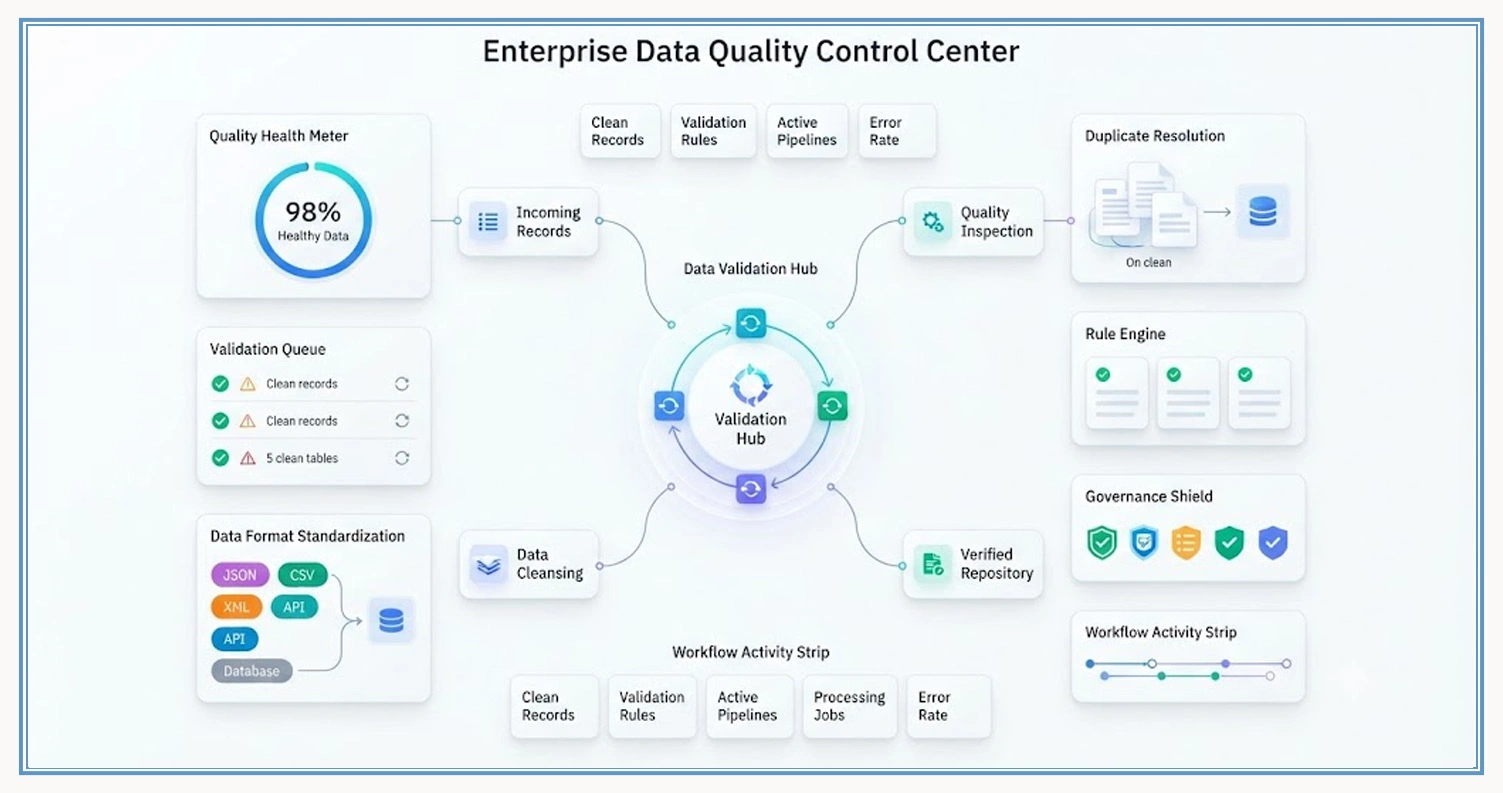
Large-scale information collection generates enormous datasets that require continuous validation before becoming suitable for business intelligence. Industry studies indicate that organizations implementing structured validation frameworks improve reporting accuracy by approximately 40%, resulting in stronger operational confidence and more dependable forecasting capabilities across multiple departments.
Many enterprises combine Web Data Mining with automated validation procedures to classify collected information, eliminate inconsistencies, and organize structured datasets for downstream analytics. This integrated approach strengthens governance while creating standardized information suitable for market research, forecasting, operational dashboards, and executive reporting.
Organizations commonly strengthen data quality by following these practices:
- Validate incoming records automatically
- Standardize formatting across datasets
- Remove duplicate information efficiently
- Monitor processing consistency regularly
- Improve reporting reliability continuously
- Maintain scalable governance standards
Before implementing enterprise-scale processing strategies, technical teams frequently evaluate the Real-Time Data Processing vs Batch ETL Comparison to determine which architecture best aligns with reporting schedules, operational expectations, and available infrastructure resources. Selecting an appropriate processing model ensures greater efficiency while maintaining long-term flexibility as information volumes continue increasing.
| Data Quality Issue | Validation Approach | Expected Result |
|---|---|---|
| Missing values | Automated verification | Better consistency |
| Duplicate entries | Intelligent cleansing | Higher accuracy |
| Format variation | Standardization | Reliable reporting |
Flexible Delivery Frameworks Supporting Sustainable Business Intelligence Growth
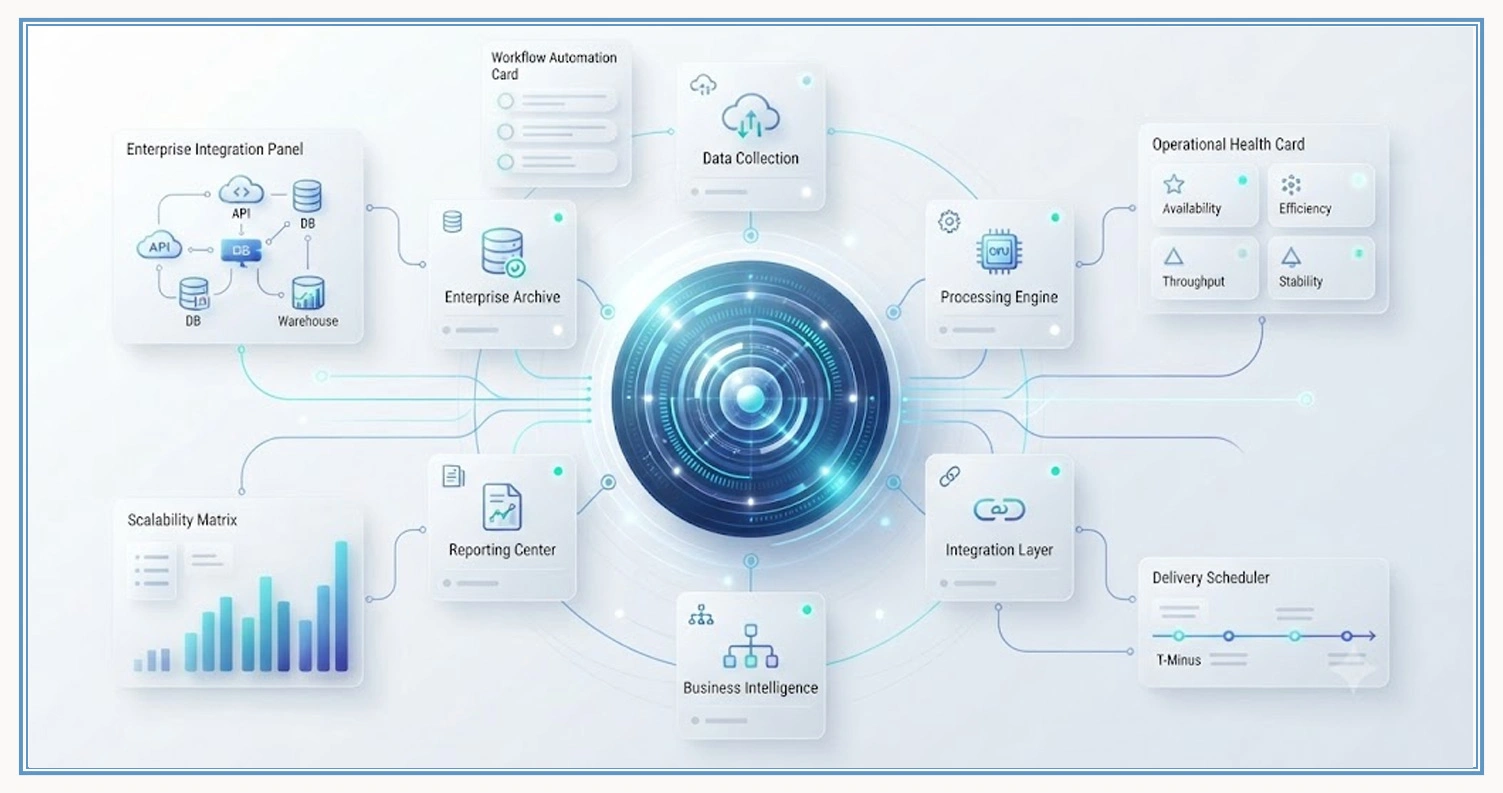
Selecting an appropriate delivery framework is essential for organizations managing enterprise-scale information across multiple operational systems. Different reporting objectives require different processing approaches depending on business priorities, infrastructure capabilities, and analytical timelines. Businesses supporting long-term reporting generally prioritize scheduled workflows, while operational monitoring may require faster information availability.
Establishing the right strategy improves scalability, reporting consistency, and enterprise-wide operational efficiency. Organizations frequently rely on Web Scraping Services to automate large-scale information collection while simplifying integration with reporting platforms, analytics systems, and business intelligence environments. Well-designed collection frameworks reduce manual intervention, improve consistency, and provide dependable datasets suitable for strategic decision-making.
Effective enterprise delivery strategies typically include:
- Standardize reporting workflows
- Automate enterprise integrations
- Improve scalability across departments
- Reduce manual operational effort
- Strengthen analytical consistency
- Support sustainable business growth
Technical decision-makers often evaluate Use Cases for Real-Time vs Batch Data Pipelines when selecting processing architectures that align with business objectives. They also examine Data Delivery Methods Comparison to determine which delivery strategy supports reporting frequency, infrastructure investment, scalability goals, and future operational expansion without introducing unnecessary complexity.
| Business Requirement | Processing Approach | Operational Benefit |
|---|---|---|
| Historical reporting | Scheduled workflow | Lower operational cost |
| Trend evaluation | Planned execution | Consistent insights |
| Enterprise analytics | Integrated processing | Greater scalability |
How Mobile App Scraping Can Help You?
Managing enterprise-scale information becomes significantly easier when organizations adopt structured automation supported by Batch Data Processing for Large-Scale Web Scraping. We deliver scalable extraction, transformation, validation, and delivery solutions that simplify large-volume data management while maintaining consistency across multiple business platforms.
We provide complete support through:
- Automate scheduled extraction across multiple digital platforms
- Validate collected records before processing begins
- Standardize structured and unstructured information efficiently
- Remove duplicate entries using intelligent validation workflows
- Integrate processed datasets with existing enterprise systems
- Deliver scalable reporting frameworks for long-term growth
Organizations seeking dependable enterprise automation also benefit from Enterprise Batch Data Integration Solutions via Crawler, enabling smooth data movement across reporting platforms, analytics environments, and business intelligence systems.
Conclusion
Efficient enterprise data management depends on selecting processing models that balance scalability, accuracy, and operational efficiency. Organizations implementing Batch Data Processing for Large-Scale Web Scraping reduce infrastructure pressure, improve reporting consistency, and create dependable analytical workflows capable of supporting long-term business growth.
Evaluating Real-Time vs Batch Data Pipelines for Modern Enterprises via Scraper further helps decision-makers select architectures aligned with evolving reporting needs, operational priorities, and future expansion strategies. Contact Mobile App Scraping today to build scalable, high-performance data processing solutions tailored to your enterprise requirements.