How Can GeM Tender Data Scraping for Procurement Intelligence Improve Government Contract Discovery?
Introduction
Government procurement creates valuable business opportunities, but identifying relevant tenders across multiple categories and updates can become challenging without structured data collection. Organizations increasingly rely on digital intelligence to monitor procurement trends, compare bid activity, and evaluate historical contract outcomes. Modern Web Scraping With AI further improves the speed and accuracy of collecting procurement information from large public platforms.
Companies seeking consistent visibility into procurement activities benefit from GeM Tender Data Scraping for Procurement Intelligence, enabling them to organize tender announcements, supplier participation, and purchasing patterns into actionable business insights. Instead of manually reviewing thousands of listings, decision-makers receive structured datasets for better planning and faster opportunity assessment.
As procurement competition continues to increase, accurate market intelligence becomes essential for improving bid quality and identifying emerging government requirements. Data-driven procurement monitoring supports strategic decisions, minimizes missed opportunities, and strengthens long-term participation across public sector purchasing ecosystems.
Building Stronger Procurement Visibility Through Structured Tender Intelligence
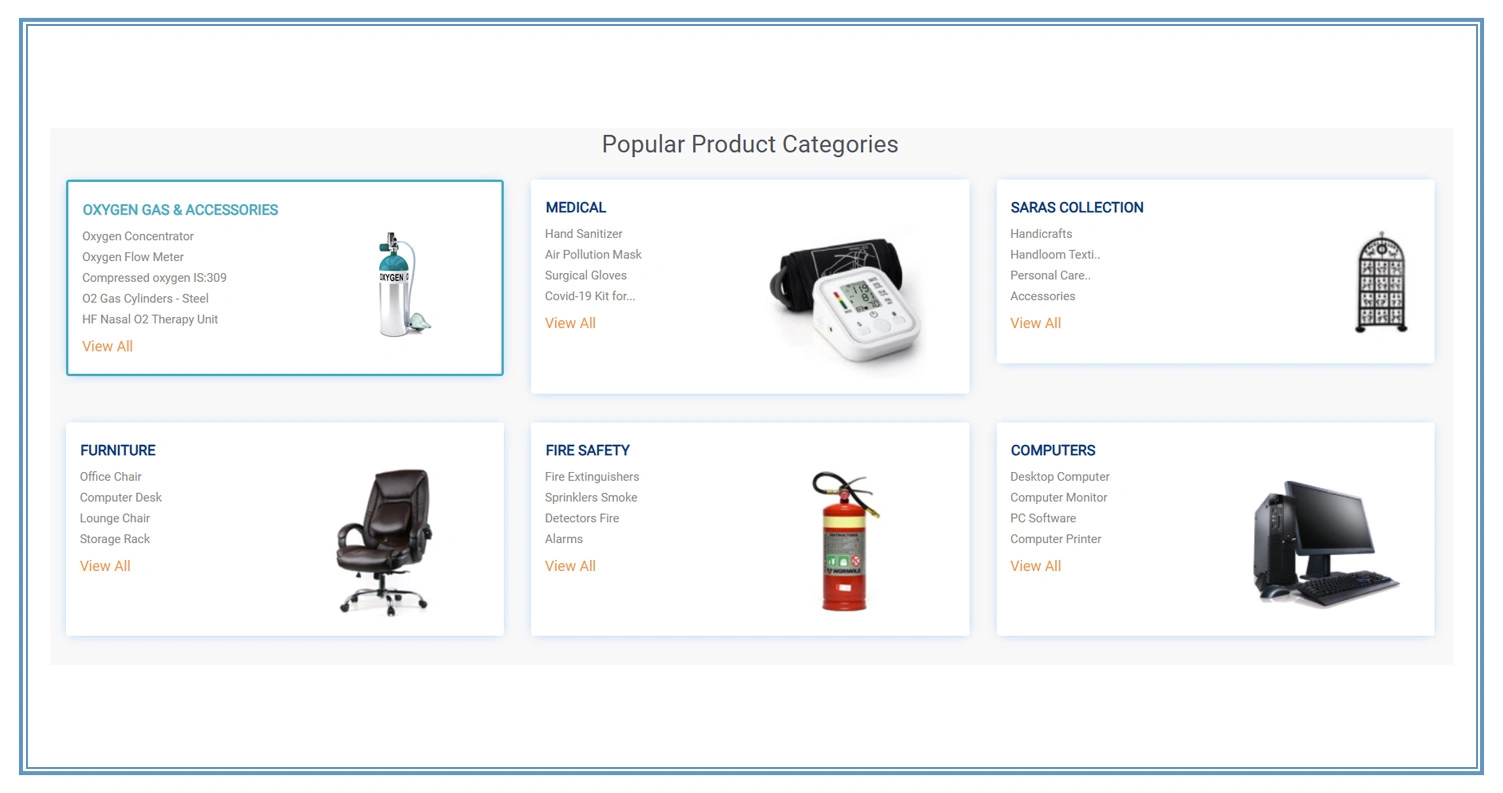
Government procurement opportunities are published continuously across multiple departments, categories, and procurement values, making manual monitoring both time-consuming and inconsistent. Businesses often struggle to identify relevant tenders before submission deadlines because thousands of new listings appear regularly. Integrating GeM Bid Data Scraping Essential for Gaining Timely Market Insights into procurement workflows helps organizations organize procurement announcements, classify opportunities, and monitor tender activity from a centralized dataset.
Organizations that monitor procurement information systematically often respond faster to bid announcements than those relying on manual searches. Historical procurement records also reveal purchasing frequency, department preferences, and recurring procurement cycles that assist long-term business planning. According to industry research, automated procurement monitoring can reduce tender identification time by nearly 65%, giving businesses additional time to prepare compliant documentation and evaluate contract suitability before competitors.
Modern procurement intelligence platforms become even more effective when combined with Web Scraping With AI, allowing businesses to classify procurement records, detect new opportunities automatically, and organize large datasets with greater accuracy. AI-assisted processing also minimizes duplicate records while improving data quality for reporting and strategic evaluation across multiple procurement categories.
Key advantages include:
- Faster identification of suitable tenders
- Better procurement opportunity classification
- Reduced manual monitoring efforts
- Improved historical procurement visibility
- Enhanced bid preparation timelines
- Stronger strategic planning using structured datasets
| Procurement Challenge | Intelligent Solution | Business Benefit |
|---|---|---|
| Missed tender updates | Automated monitoring | Faster opportunity discovery |
| Manual research | Centralized procurement records | Higher productivity |
| Limited planning time | Continuous tracking | Better proposal readiness |
| Disorganized information | Structured datasets | Improved decision-making |
Strengthening Competitive Analysis With Historical Procurement Trends
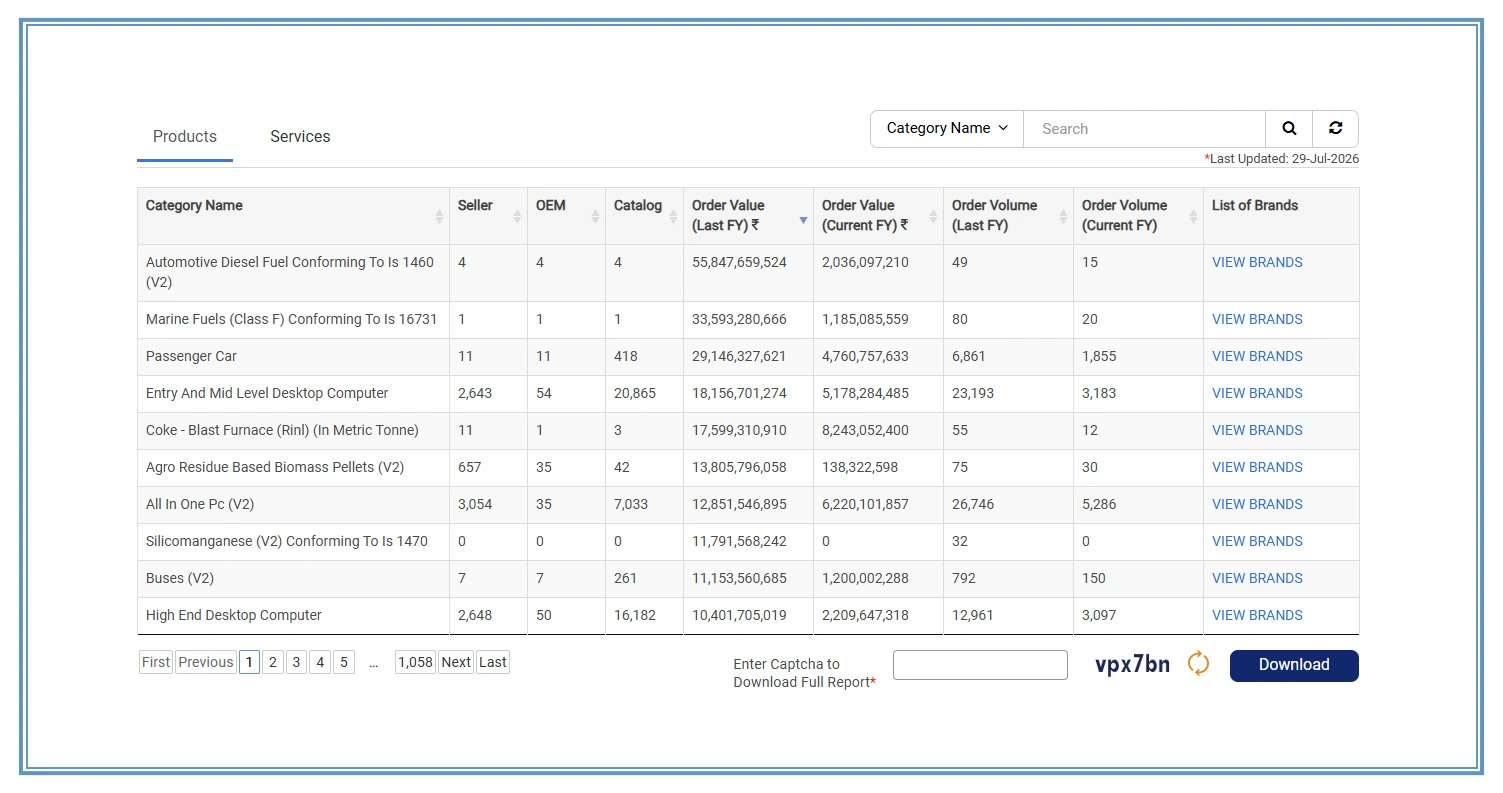
Winning government contracts requires more than simply identifying active tenders. Businesses also need historical procurement intelligence to understand purchasing behavior, supplier participation, and contract award frequency across different government organizations. Continuous monitoring supported by Live Crawler Data Scraping enables procurement teams to evaluate long-term purchasing trends while identifying recurring opportunities that align with organizational capabilities and business objectives.
Historical procurement analysis provides valuable insight into buying cycles, department-specific purchasing preferences, average procurement values, and vendor participation patterns. Market studies indicate that procurement intelligence improves competitive planning by approximately 58%, helping businesses make informed bidding decisions with higher confidence.
Businesses can further strengthen procurement research through GeM Tender Intelligence API for Market Research, enabling seamless integration of procurement datasets into business intelligence platforms, dashboards, and analytical reporting systems. This integration supports faster reporting, improves procurement forecasting, and allows organizations to compare procurement activity across multiple departments with minimal manual intervention.
Key benefits include:
- Analyze procurement trends consistently
- Compare supplier participation histories
- Improve procurement forecasting accuracy
- Monitor department purchasing behavior
- Support competitive benchmarking
- Prioritize high-value procurement opportunities
| Market Analysis Area | Analytical Purpose | Business Value |
|---|---|---|
| Procurement frequency | Demand evaluation | Better planning |
| Purchasing departments | Opportunity targeting | Resource optimization |
| Vendor participation | Competitive assessment | Improved positioning |
| Historical contracts | Market forecasting | Smarter investments |
Improving Bid Planning With Reliable Procurement Data Insights
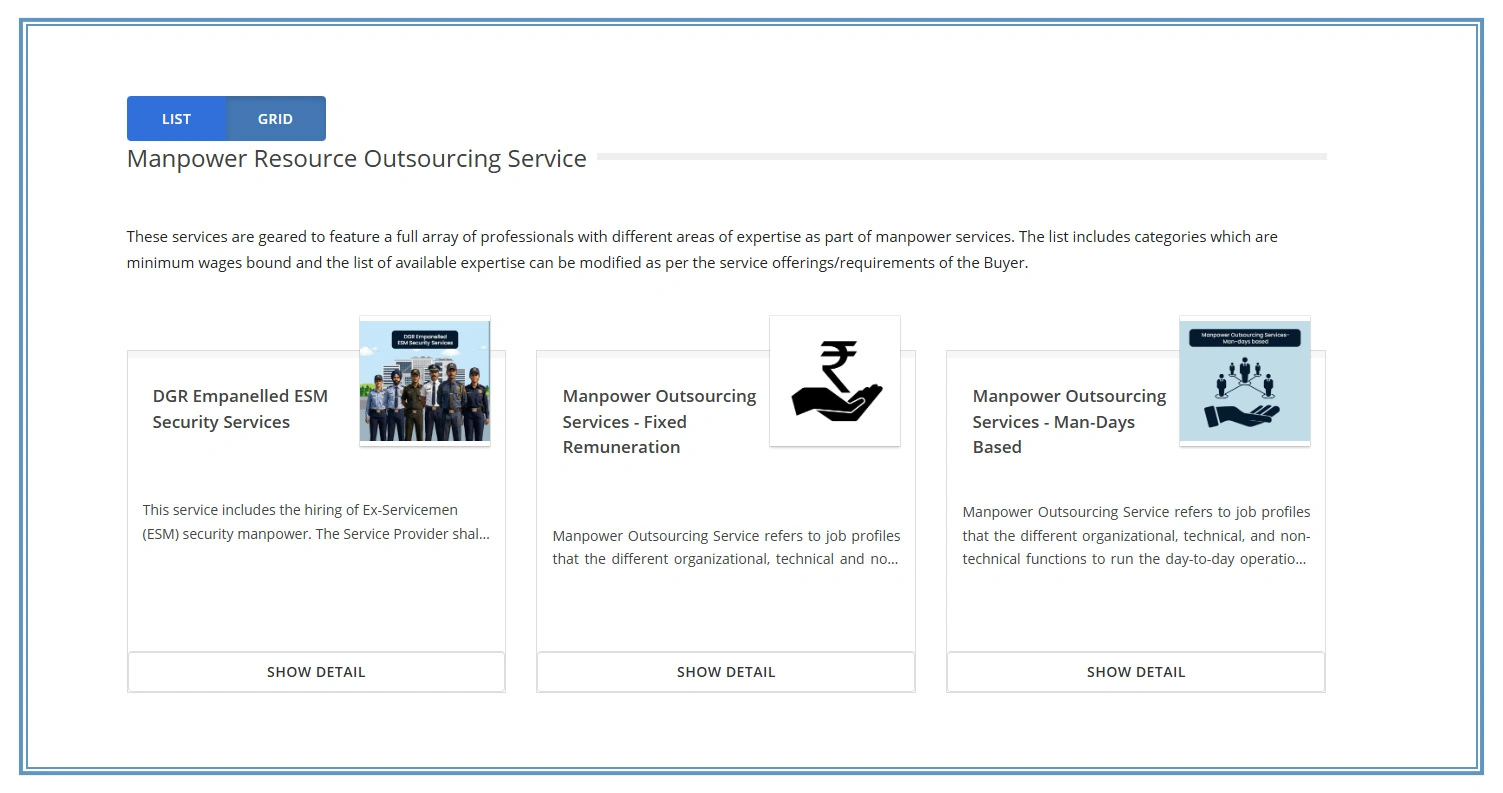
Successful government bidding depends on accurate procurement intelligence supported by reliable historical records and structured contract information. Advanced procurement workflows supported by API Scraping simplify the collection of procurement information while maintaining consistency across large datasets for operational decision-making.
Historical contract records provide valuable intelligence about awarded suppliers, procurement values, technical specifications, and submission timelines. Access to structured procurement information enables organizations to benchmark previous contracts, improve pricing strategies, and evaluate procurement competitiveness with greater accuracy.
Organizations can also strengthen procurement reporting by utilizing GeM Contract Award Data via Crawler, providing structured award information for historical analysis, supplier benchmarking, and procurement trend evaluation. These insights support more informed strategic planning while helping procurement teams identify recurring government purchasing requirements across multiple industries and departments.
Key outcomes include:
- Improve proposal preparation accuracy
- Analyze historical contract performance
- Benchmark supplier participation trends
- Strengthen procurement reporting
- Optimize bidding resource allocation
- Support long-term procurement strategies
| Procurement Information | Practical Application | Strategic Outcome |
|---|---|---|
| Award records | Historical evaluation | Better planning |
| Supplier performance | Competitive benchmarking | Improved positioning |
| Procurement schedules | Resource planning | Faster execution |
| Bid documentation | Proposal preparation | Higher efficiency |
How Mobile App Scraping Can Help You?
Businesses require reliable procurement intelligence to compete effectively in public sector marketplaces where opportunities change frequently. By implementing GeM Tender Data Scraping for Procurement Intelligence, organizations receive structured procurement datasets that improve contract visibility, simplify opportunity tracking, and support informed decision-making throughout the bidding lifecycle.
Our advanced mobile app scraping solutions help organizations:
- Monitor procurement updates automatically.
- Track department purchasing activities.
- Organize historical bidding records.
- Compare supplier participation trends.
- Generate structured procurement datasets.
- Support faster strategic decision-making.
In addition to these capabilities, businesses can strengthen procurement intelligence using Automated GeM Portal Tender Data Extraction Services, delivering consistent, organized, and scalable tender information for long-term market analysis and competitive planning.
Conclusion
Government procurement continues to become increasingly competitive, making structured market intelligence essential for identifying valuable contract opportunities. Organizations adopting GeM Tender Data Scraping for Procurement Intelligence improve procurement visibility, evaluate historical purchasing behavior, and strengthen bidding strategies using organized data rather than manual research.
Similarly, Scrape GeM Bid Details and Contract Award Data enables businesses to analyze award trends, benchmark competitors, and improve procurement planning with reliable intelligence. Contact our team today to build customized procurement data solutions that support smarter government contract discovery and long-term business growth.