Introduction
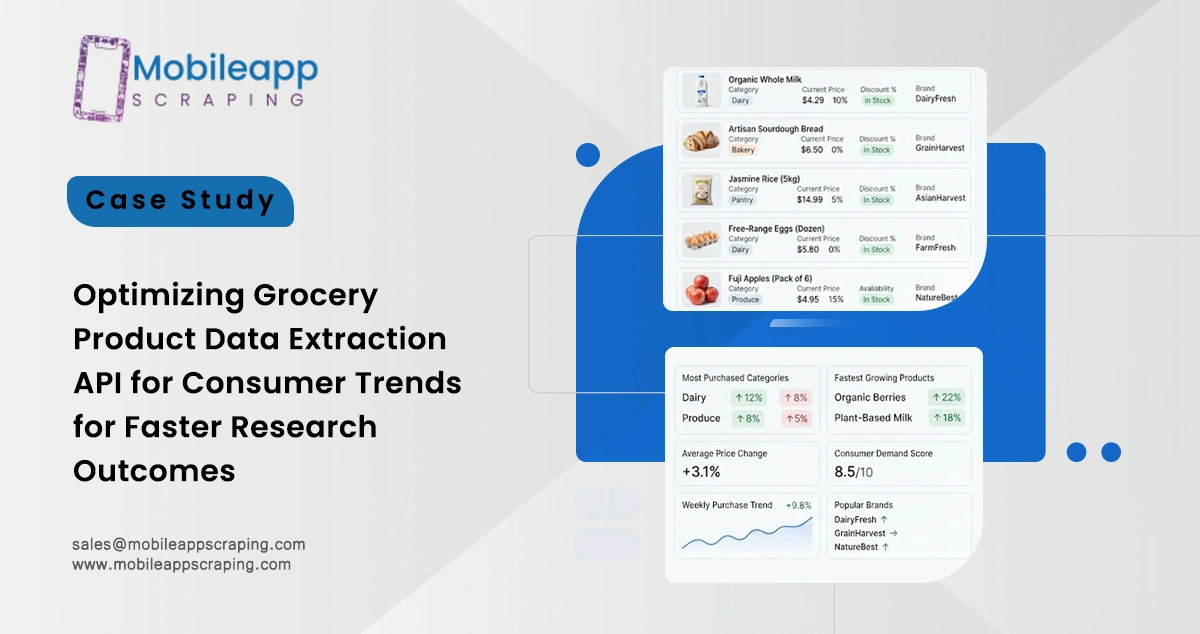
Retail research in today's data-saturated landscape demands more than traditional survey methods or quarterly reports. Businesses operating in the grocery segment need continuous, structured access to product-level intelligence that reflects how consumers are actually behaving on the shelf and online. The Grocery Product Data Extraction API for Consumer Trends addresses this need by powering faster, more reliable access to real-time retail data that researchers, analysts, and brand teams can act on immediately.
Understanding what moves product categories, how pricing shifts affect purchase intent, and which items gain traction during specific seasons requires a foundation of clean, structured data. Through Grocery Store Data Collection for Market Research, organizations can build that foundation systematically, replacing guesswork with evidence-based strategy.
We specialize in delivering this kind of research-grade intelligence at scale. Our Grocery App Scraping Services are engineered to help research teams, retail consultants, and product strategists eliminate data gaps and accelerate decision cycles. Whether the need is academic inquiry, brand benchmarking, or category planning, we bring structure and speed to every stage of the data lifecycle.
The Client
A regional grocery research consultancy with operations spanning twelve metropolitan markets approached us seeking a more reliable foundation for consumer behavior studies. Their team primarily served FMCG manufacturers and category managers who needed granular product-level insights to support quarterly planning decisions. The firm had built its reputation on thorough analysis, but its underlying data infrastructure had not kept pace with the growing volume and complexity of requests it was receiving.
The consultancy's research model relied heavily on Grocery Dataset APIs for Academic Research, particularly to support university partnerships and white-paper publications focused on food consumption trends. However, inconsistencies in available data were creating reproducibility issues in their studies, and clients began questioning the reliability of their reports.
Serving both commercial clients and research institutions meant that the consultancy operated under dual expectations. Commercial partners demanded speed and competitive accuracy, while academic collaborators prioritized depth, traceability, and category breadth. Grocery Category Performance Analytics via Scraping became a central requirement, helping the firm serve both audiences through a single, unified data stream that could be sliced and filtered depending on the end use.
The Challenge
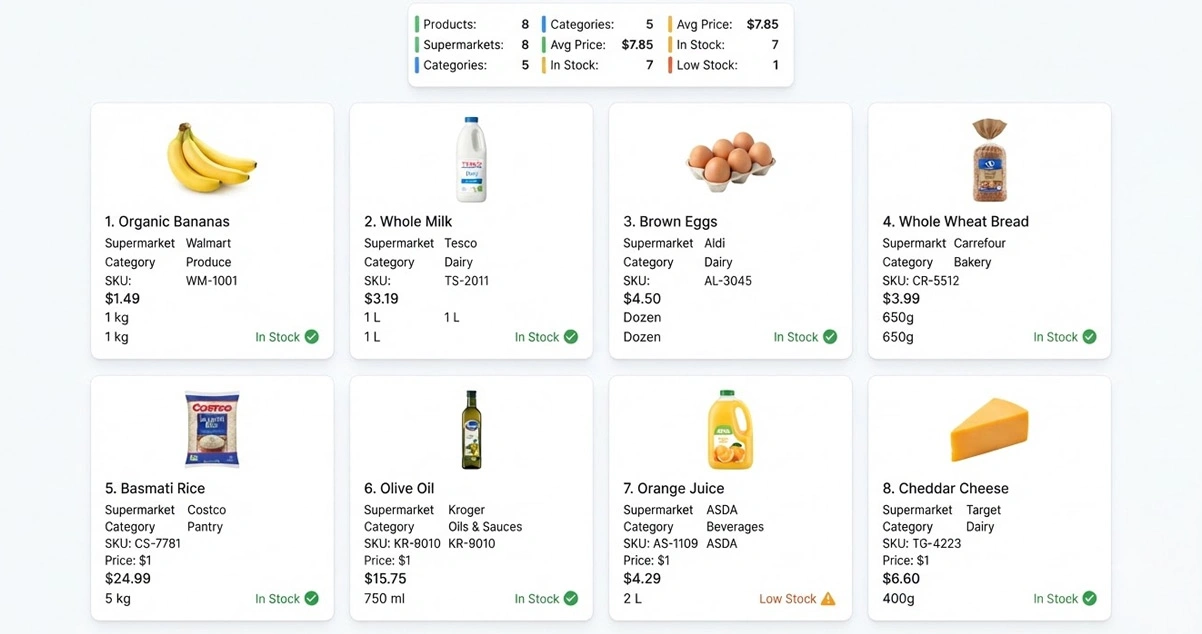
The consultancy encountered several critical bottlenecks that slowed research output and limited the quality of insights it could deliver to clients.
- Fragmented product listings across grocery platforms created structural inconsistencies that undermined Grocery Dataset APIs for Academic Research, making it nearly impossible to maintain clean, comparable datasets across multiple retail environments.
- Legacy data sourcing methods lacked the responsiveness needed for real-time category monitoring. Teams relying on Price Comparison Services found that pricing data retrieved manually was often stale by the time it reached analysts, reducing its practical value for competitive assessments.
- The absence of a unified product taxonomy across retailers created significant classification challenges. Without standardized category mapping, Grocery Category Performance Analytics via Scraping produced incomplete or misaligned category views that distorted research findings.
- Seasonal product cycles and promotional events introduced rapid changes in inventory and pricing that the existing infrastructure could not capture. This limited the team's ability to support clients with time-sensitive strategy work tied to predictable demand windows.
The Solution
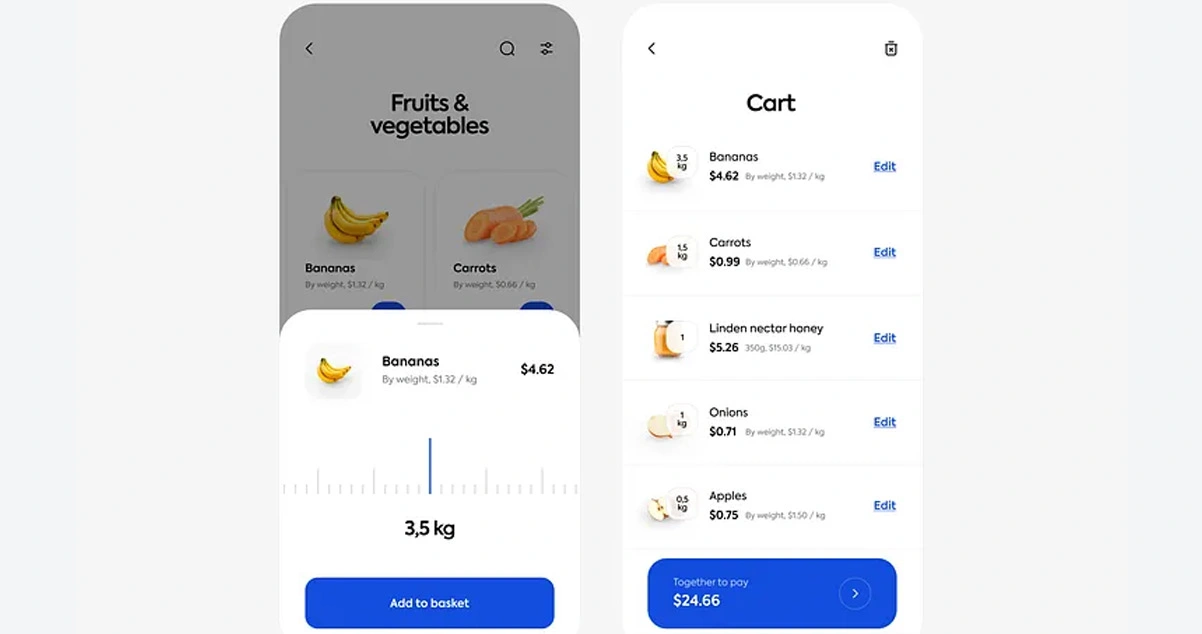
We engineered a multi-layered data architecture tailored to the consultancy's dual-purpose research environment.
- RetailSync Intelligence Layer
A continuously updated data pipeline anchored in Web Scraping Grocery Inventory Data, designed to pull structured product-level records from across grocery platforms and normalize them into a research-ready format with consistent field definitions and taxonomy. - Unified Product Repository
A categorized product database built using Grocery Supermarkets Store Datasets, consolidating item names, pack sizes, SKU identifiers, shelf placement indicators, and availability signals across multiple retail banners into a single, queryable format. - Dynamic Pricing Feed
A real-time data module powered by Grocery Price Data API for Research, delivering consistent price point monitoring across product categories and geographies to support competitive benchmarking and elasticity modeling for both commercial and academic clients.
Implementation Process
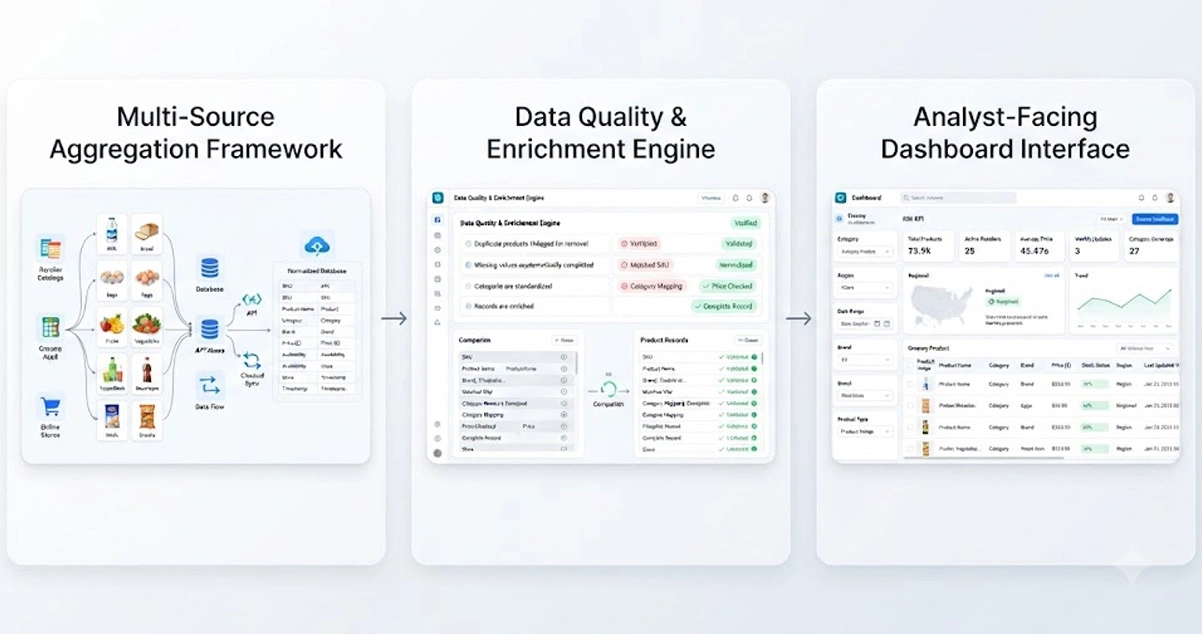
The deployment was structured in phases to ensure accuracy, integration reliability, and end-user adoption at each stage of rollout.
- Multi-Source Aggregation Framework
A centralized intake system built on Grocery Store Data Collection for Market Research unified data feeds from grocery apps, retailer websites, and digital catalogues into a single normalized pipeline with category-aligned field architecture. - Data Quality and Enrichment Engine
Raw records underwent structured validation, deduplication, and field-level enrichment to ensure accuracy before delivery. This process applied the principles behind Grocery Product Data Extraction API for Consumer Trends to maintain research-grade data quality at every output stage. - Analyst-Facing Dashboard Interface
A structured reporting layer allowed research teams to filter outputs by category, geography, time period, and product type, converting raw extraction results into presentation-ready intelligence without requiring manual post-processing.
Results & Impact
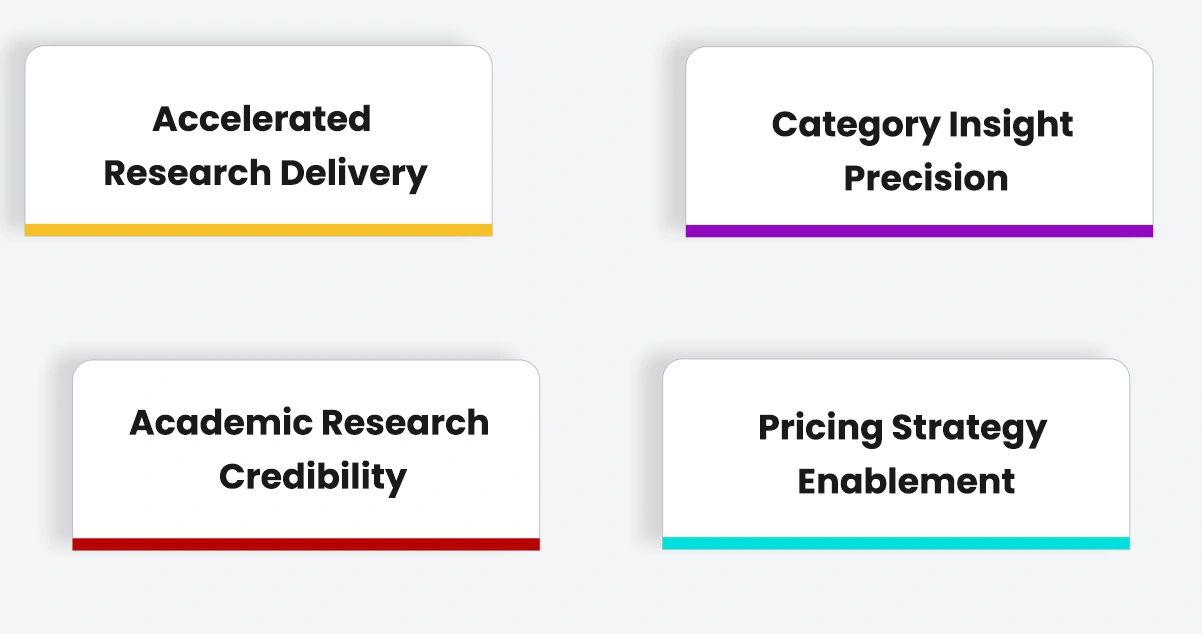
The implementation produced measurable improvements across research speed, data quality, and client satisfaction.
- Accelerated Research Delivery
With a reliable data pipeline in place, the consultancy reduced turnaround times for standard research reports by a significant margin. Teams using Web Scraping Grocery Inventory Data no longer faced delays tied to manual collection, allowing analysts to focus on interpretation rather than data sourcing. - Category Insight Precision
Grocery Category Performance Analytics via Scraping gave the firm's analysts the ability to monitor performance shifts at the sub-category level, improving the accuracy of recommendations delivered to FMCG manufacturing clients and enabling more targeted product positioning strategies. - Academic Research Credibility
The consultancy's university partnerships benefited from reproducible, citation-ready datasets supported through structured Grocery Dataset APIs for Academic Research, which strengthened the scientific validity of co-authored studies and increased the firm's standing in academic publishing circles. - Pricing Strategy Enablement
Armed with consistent outputs from the Grocery Price Data API for Research, the consultancy's commercial clients developed more responsive pricing strategies, reducing reactive discounting and improving margin visibility across high-velocity product categories.
Key Highlights
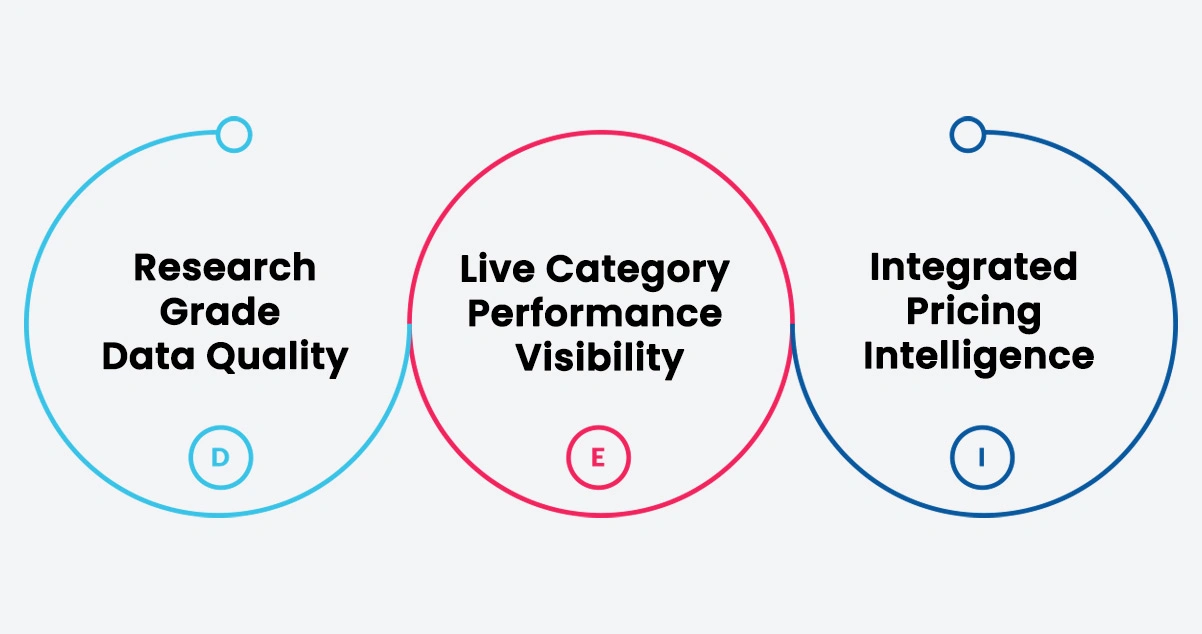
- Research-Grade Data Quality
Every data point flowing through our system is validated, deduplicated, and enriched before delivery. Our approach to Grocery Store Data Collection for Market Research ensures that research teams receive structured, analysis-ready outputs with full category alignment and field consistency. - Live Category Performance Visibility
Through Grocery Category Performance Analytics via Scraping, clients gain access to continuously refreshed category-level signals that capture seasonal shifts, promotional events, and SKU-level performance changes as they happen across targeted grocery environments. - Integrated Pricing Intelligence
Our Grocery Price Data API for Research delivers consistent, regionally segmented pricing data across grocery formats, giving research teams and brand managers the granular inputs they need for elasticity modeling, competitive benchmarking, and promotional planning.
Use Cases
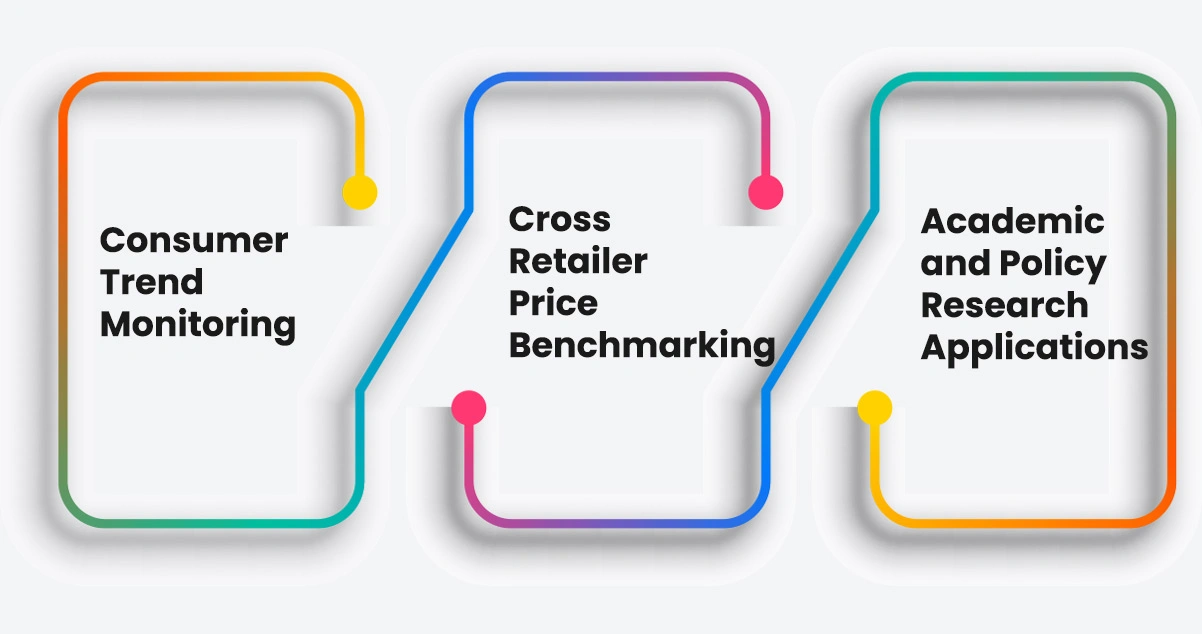
Our grocery data solutions power a wide range of research applications across commercial, academic, and strategic contexts.
- Consumer Trend Monitoring
Category analysts and market researchers use Grocery Product Data Extraction API for Consumer Trends to track shifts in purchase behavior, identify emerging product types, and map demand evolution across grocery segments at scale and with regional precision. - Cross-Retailer Price Benchmarking
Research teams conducting competitive pricing studies apply Grocery Price Scraping With UPC Matching Across Retailers to align product-level price points across different retail banners, enabling accurate comparison models even when packaging variations or private-label substitutions create matching challenges. - Academic and Policy Research Applications
University research departments and policy analysts working on food access, affordability, and consumption behavior studies integrate Grocery Dataset APIs for Academic Research into their methodologies to ensure data reproducibility and support peer-reviewed publication standards.
Client’s Testimonial

Partnering with Mobile App Scraping transformed how our team approaches product research. The Grocery Product Data Extraction API for Consumer Trends gave us something we had been missing for years, which is a reliable, structured, and consistently updated data foundation. The Grocery Price Data API for Research in particular made our pricing analysis far more credible and much faster to produce.
– Dr. Alliana Ellingsworth, Head of Consumer Research Strategy
Conclusion
The grocery retail environment moves quickly, and research teams that depend on outdated or inconsistent data consistently find themselves a step behind where strategy requires them to be. A purpose-built Grocery Product Data Extraction API for Consumer Trends changes that dynamic by providing the kind of continuous, structured product intelligence that modern research workflows genuinely require.
From category performance monitoring to cross-retailer pricing studies, the ability to work with clean, timely, and structured grocery data defines the difference between insight and assumption. Web Scraping Grocery Inventory Data solutions from us are designed to close that gap, giving research consultancies, brand teams, and academic institutions the data infrastructure they need to work faster and report with greater confidence.
Contact Mobile App Scraping today to discuss how our specialized grocery data extraction solutions can elevate the quality and speed of your consumer research.