

What Insights Can Car Rental App Scraping for Vehicle Prices Offer on Daily Rates and Availability?
Introduction
Dynamic pricing models dominate the modern mobility sector, causing vehicle rental costs to shift rapidly across cities, airports, and booking windows. Fleet operators and travel aggregators struggle to maintain profitable margins without real-time visibility into competitor adjustments. Implementing Car Rental App Scraping for Vehicle Prices bridges this critical intelligence gap.
Traditional manual price checks fail to capture hourly fluctuations driven by local events, seasonal demand, and sudden flight cancellations. Automated extraction pipelines monitor thousands of vehicle listings simultaneously across iOS and Android ecosystems. Relying on professional Car Rental App Scraping Services ensures clean, structured datasets without triggering anti-bot blocks.
Real-time data feeds empower revenue managers to benchmark compact cars, SUVs, and luxury sedans against regional rivals accurately. By tracking fleet utilization and surge pricing patterns, businesses optimize daily rate structures and maximize vehicle occupancy rates across every operational hub.
Analyzing Daily Rates and Surge Pricing Across Competitor Networks
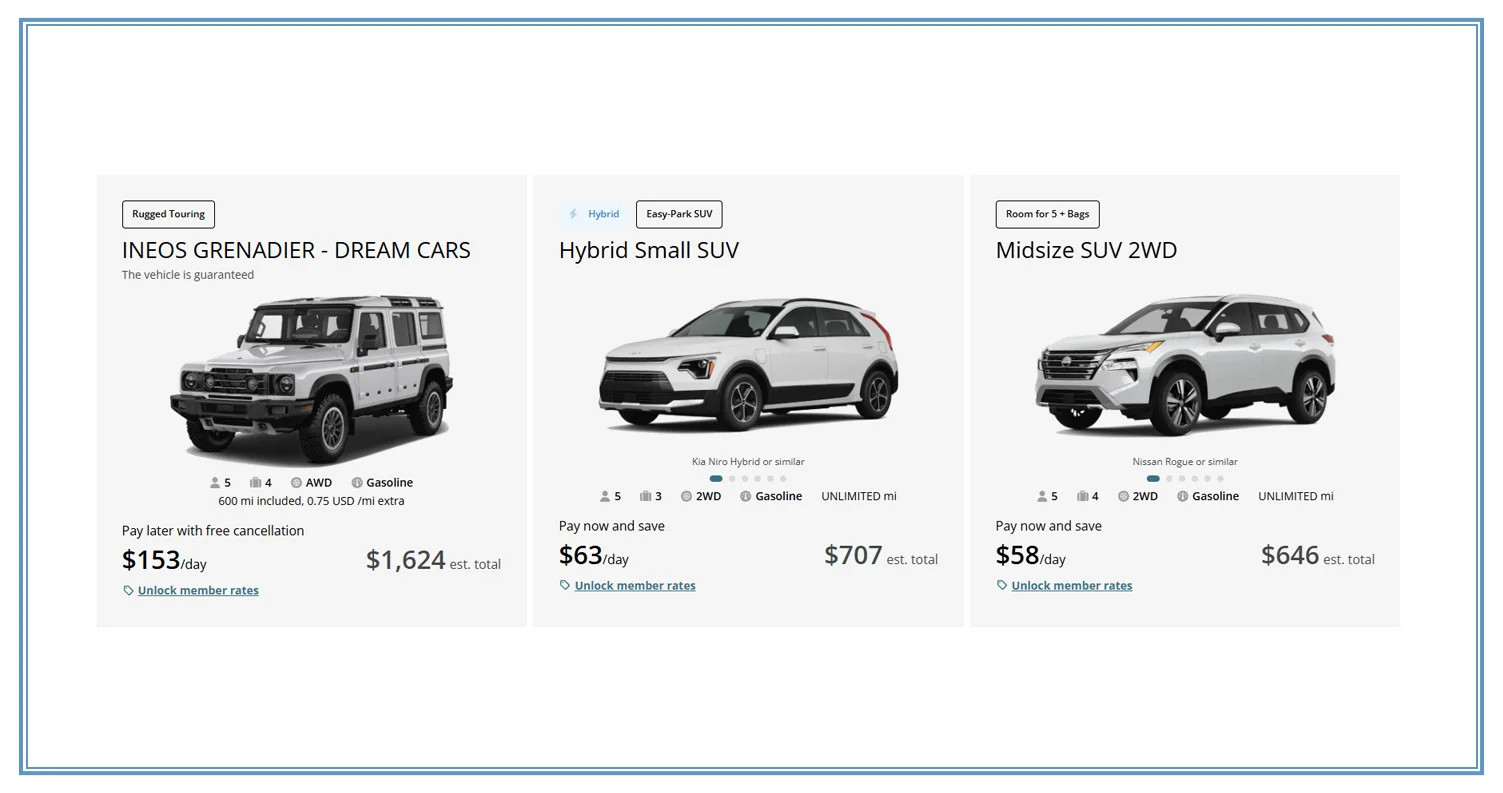
Modern car rental platforms adjust daily tariffs multiple times within a single twenty-four-hour cycle to capture shifting consumer demand. Pricing analysts utilizing Competitive Benchmarking Scraping Services can monitor how rival agencies respond to weekend demand spikes, holiday travel rushes, and unexpected flight delays. Instead of guessing optimal rate thresholds, revenue teams gain granular visibility into base pricing structures without relying on outdated historical reports or manual browser checks.
Industry research indicates that dynamic pricing algorithms drive daily rate variances of up to 42% between advance reservations and same-day pickups across major metropolitan areas. Furthermore, rental agencies adjusting rates based on live telemetry achieve a noticeable improvement in overall revenue per available vehicle day. Deploying a dedicated Car Rental Web Data Scraper allows businesses to capture micro-adjustments automatically, transforming raw app interfaces into actionable market intelligence.
| Vehicle Category | Average Advance Rate (7 Days Out) | Average Same-Day Rate | Peak Surge Variance | Primary Demand Driver |
|---|---|---|---|---|
| Economy / Compact | $48 / day | $67 / day | +39.6% | Weekend city trips |
| Midsize SUV | $74 / day | $105 / day | +41.9% | Family vacations |
| Full-Size Sedan | $65 / day | $89 / day | +36.9% | Corporate travel |
| Luxury / Convertible | $135 / day | $192 / day | +42.2% | Leisure & events |
- Monitor hourly tariff modifications across competing mobile applications in real time.
- Evaluate the impact of regional events on weekend pricing multipliers and surcharges.
- Adjust local rate cards automatically to maintain optimal occupancy and competitive parity.
Tracking these shifts across multiple booking horizons helps operators identify exact inflection points where competitors raise prices or offer promotional discounts. Armed with continuous rate telemetry, fleet managers fine-tune yield management rules to capture price-sensitive bookings early while preserving high-margin inventory for peak demand windows.
Tracking Vehicle Availability and Inventory Depletion Across Regional Hubs

Beyond simple rate comparisons, monitoring vehicle availability across competing platforms reveals critical supply-and-demand imbalances in specific geographic zones. When an operator decides to Scrape Budget Car Rental Data, they uncover exact inventory depletion rates across neighborhood branches and major transit hubs. Knowing when a competitor runs out of economy hatchbacks or minivans signals an immediate opportunity to adjust local pricing upward without losing market share.
Market telemetry shows that airport rental locations experience faster inventory turnover during severe weather disruptions and major conventions compared to downtown branches. Businesses leveraging Car Rental Data Collection Services can track stock statuses—such as limited availability or sold-out tags—in real time across dozens of pickup locations.
| Pickup Location Type | Average Fleet Utilization | Stockout Frequency (Peak Season) | Price Elasticity Window | Optimal Repricing Frequency |
|---|---|---|---|---|
| Major International Airport | 88% | High (3–4 times/week) | 12 to 48 hours prior | Every 30 minutes |
| Downtown Business District | 72% | Moderate (1–2 times/week) | 3 to 5 days prior | Every 2 hours |
| Suburban Neighborhood Hub | 64% | Low (Once/month) | 7 to 14 days prior | Every 6 hours |
| Resort & Tourist Destination | 91% | Very High (Daily) | 14 to 30 days prior | Every 15 minutes |
- Identify neighborhood inventory shortages before competitors saturate local pickup demand.
- Optimize cross-branch vehicle transfers using predictive stockout and utilization telemetry.
- Synchronize regional vehicle supply with live passenger arrival and booking trends.
Analyzing historical availability trends alongside current stock levels enables proactive fleet redistribution. Rather than leaving vehicles idle in low-demand suburban lots, logistics teams relocate high-demand models to constrained airport terminals ahead of anticipated shortages, maximizing asset utilization.
Evaluating Promotional Campaigns and Comprehensive Checkout Fee Structures

Headline daily rates rarely tell the complete pricing story in the vehicle rental industry, as promotional codes, loyalty discounts, and mandatory surcharges heavily influence the final checkout total. When organizations Scrape Enterprise Car Rental App Data, they capture full checkout breakdowns, including airport concession recovery fees, vehicle licensing costs, young driver surcharges, and bundled collision damage waivers. Understanding true total-cost-of-ownership for the renter prevents misleading price comparisons.
Recent e-commerce travel audits reveal that taxes, airport fees, and optional protection packages account for a substantial portion of the final transaction value on mobile rental bookings. Companies that systematically Extract Car Rental Prices at the final checkout screen gain an accurate view of competitor promotional mechanics, such as immediate payment discounts versus pay-at-counter flexibility.
| Pricing Component | Average Share of Total Bill | Variance Across Top Apps | Competitive Impact |
|---|---|---|---|
| Base Daily Rental Rate | 66% | High (±25%) | Primary search filter driver |
| Airport & Facility Fees | 14% | Low (±3%) | Fixed by local authority |
| Insurance & Damage Waivers | 12% | Very High (±40%) | Major profit margin lever |
| Taxes & Local Surcharges | 8% | None (Statutory) | Uniform across operators |
- Audit mandatory airport concession fees and local tax additions across platforms.
- Uncover hidden insurance add-ons embedded inside competitor checkout workflows.
- Structure transparent promotional discount bundles that attract high-value renters.
By dissecting these granular fee structures, product and pricing teams design more transparent, competitive rate bundles. Offering inclusive pricing packages or targeted mobile-only discounts becomes far easier when possessing exact benchmarks of how rival apps structure checkout funnels and loyalty incentives.
How Mobile App Scraping Can Help You?
Building a resilient pricing strategy requires continuous, uninterrupted access to live competitor telemetry across mobile ecosystems. Integrating Car Rental App Scraping for Vehicle Prices directly into your revenue management workflow eliminates blind spots and accelerates commercial decision-making across every regional market.
- Automate daily rate tracking across hundreds of pickup locations and vehicle classes without manual intervention.
- Detect competitor stockouts early to capture high-margin overflow bookings during peak travel periods.
- Analyze regional demand shifts driven by flight schedules, local conventions, and seasonal tourism trends.
- Benchmark promotional discounts, loyalty perks, and bundled insurance packages at the final checkout stage.
- Optimize fleet distribution by moving idle vehicles from low-demand branches to high-utilization airport hubs.
- Feed clean, structured JSON or CSV datasets directly into internal business intelligence and dynamic pricing engines.
Partnering with a specialized mobile data extraction provider ensures seamless scalability, anti-blocking resilience, and high data accuracy. Teams that Scrape Car Rental App Data consistently outperform competitors by reacting to market shifts in real time rather than relying on outdated weekly reports.
Conclusion
Navigating intense price competition and fluctuating fleet demand requires more than historical guesswork or periodic manual checks. By implementing Car Rental App Scraping for Vehicle Prices across your pricing analytics stack, your organization gains the real-time visibility needed to refine daily tariffs, anticipate inventory shortages, and protect profit margins across every vehicle tier.
Transforming raw mobile app listings into structured intelligence empowers revenue managers to make confident, data-backed adjustments around the clock. Partnering with expert Car Rental Data Collection Services ensures reliable, compliant, and scalable data pipelines tailored to your exact operational footprint. Contact Mobile App Scraping team today to request a custom sample dataset and elevate your fleet pricing strategy.