Introduction
The grocery retail industry is undergoing a significant transformation, driven by shifting consumer behaviors, expanding digital storefronts, and intensifying price competition across both traditional and quick-commerce platforms. Retailers who rely on outdated pricing intelligence risk falling behind competitors who act on accurate, real-time data. Real-Time Grocery Price Comparison for Analytics Using API Data has emerged as a foundational capability for businesses that want to make faster, smarter decisions around pricing, assortment, and market positioning.
Modern retail analytics demands more than periodic audits or manual competitor checks. Brands today require continuous, structured data flows that reflect what consumers are actually seeing across grocery apps and digital shelves. Grocery App Data Extraction plays a pivotal role in capturing this information reliably and at scale, turning fragmented pricing signals into coherent market intelligence that teams can act upon with confidence.
This case study explores how our specialized data solutions helped a prominent retail analytics firm transform its competitive monitoring operations. By deploying structured API-based data pipelines, the client gained the visibility needed to sharpen its pricing strategy, enhance regional assortment planning, and build a more responsive approach to market movement across multiple grocery categories and geographies.
The Client
A mid-to-large-scale retail analytics firm serving grocery chains across urban and semi-urban markets approached us with a clearly defined objective: build a scalable, automated system capable of tracking competitor prices and product availability across dozens of digital grocery platforms in real time. The firm had been growing steadily, but its internal data infrastructure could no longer keep pace with the speed of market changes it needed to monitor.
The client specialized in providing pricing strategy and market intelligence support to grocery retailers. Their analysts depended heavily on accurate, timely datasets to advise clients on promotional planning, shelf pricing, and seasonal product adjustments. To strengthen this advisory function, the firm required the ability to Extract Grocery Pricing Intelligence API for Retailers from multiple platforms simultaneously without manual intervention slowing the process down.
Their long-term vision involved building a self-sustaining intelligence layer that could support Real-Time Grocery Price Comparison for Analytics Using API Data at a scale that matched their expanding client roster. The client needed a technology partner with deep expertise in structured data acquisition and the flexibility to adapt data delivery to diverse analytical frameworks used across their team.
The Challenge
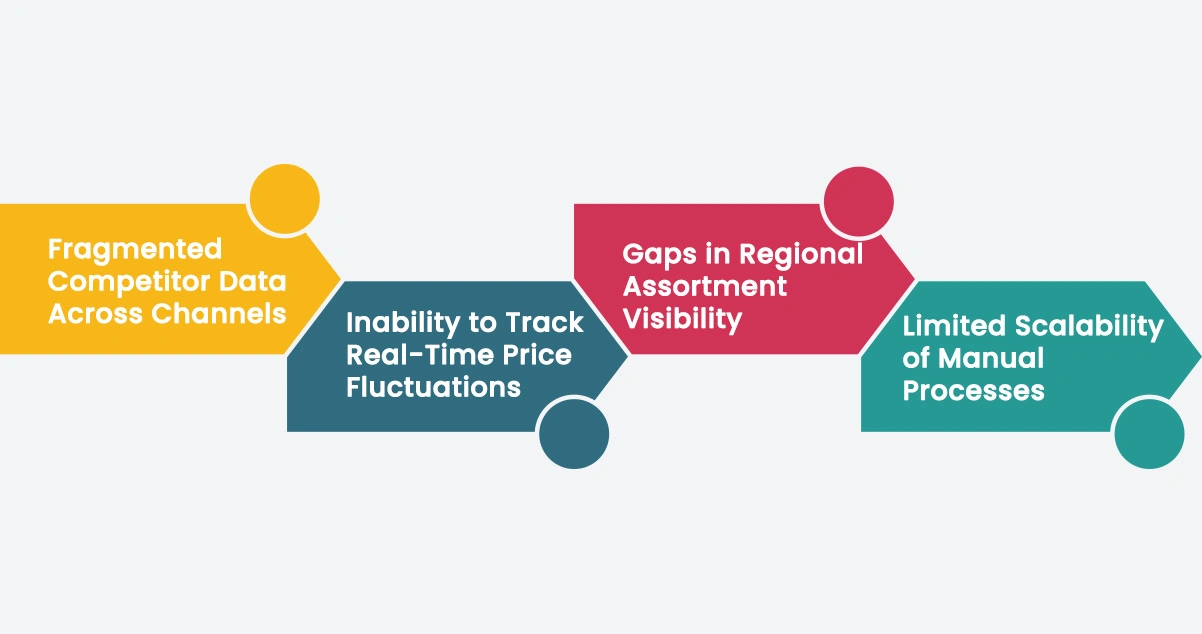
The client encountered several compounding obstacles that limited the effectiveness of their analytics delivery and slowed the pace of strategic recommendations they could offer to grocery retail clients.
-
Fragmented Competitor Data Across Channels
The absence of a unified system for Grocery Competitor Price Monitoring via API meant analysts were spending more time collecting data than interpreting it, severely reducing the value they could deliver to clients. -
Inability to Track Real-Time Price Fluctuations
The existing infrastructure lacked the capability to detect these changes as they happened, creating blind spots in the client's intelligence reports and undermining the credibility of their pricing recommendations. -
Gaps in Regional Assortment Visibility
Without access to structured Grocery Supermarkets Store Datasets, regional analysts had no reliable foundation for comparing local pricing behavior or identifying underserved product segments in specific markets. -
Limited Scalability of Manual Processes
Scaling a human-driven data collection process was neither cost-effective nor operationally sustainable, and the inconsistencies it introduced were creating downstream issues in reporting and trend analysis.
The Solution
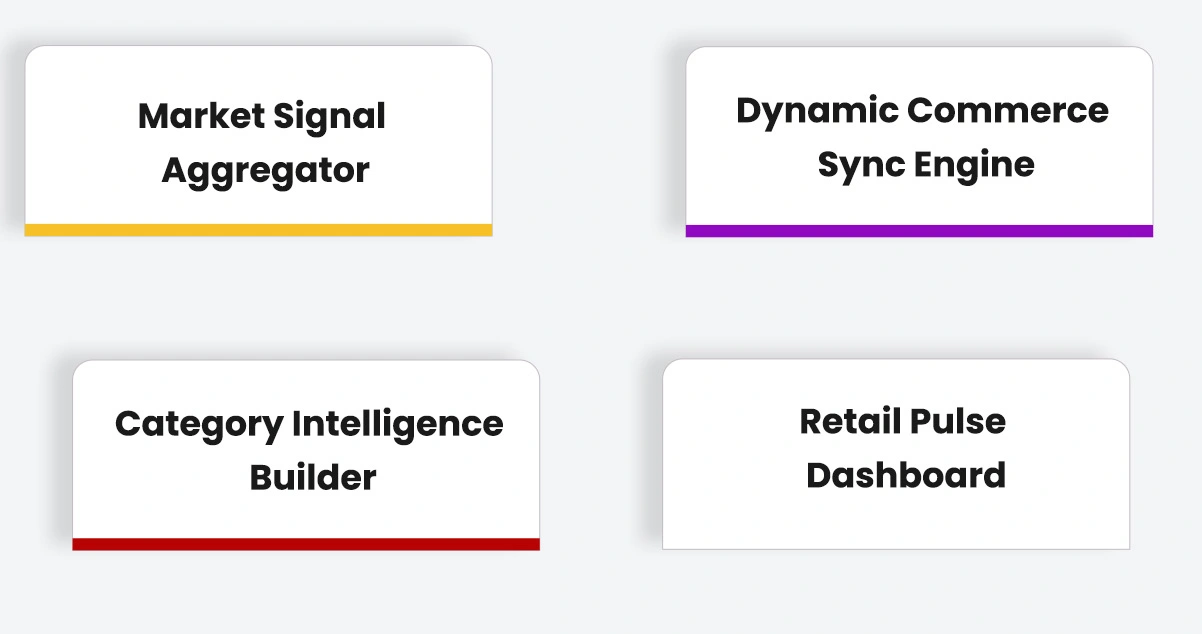
We engineered a multi-layered data acquisition and processing architecture specifically designed to address the client's operational needs with precision, reliability, and scalability.
- Market Signal Aggregator
A centralized pipeline was built to consolidate pricing signals from across multiple grocery apps and retail platforms through Grocery Competitor Price Monitoring via API, enabling analysts to work from a single, continuously updated source of market truth rather than disconnected data points. - Dynamic Commerce Sync Engine
This component was designed to handle Quick Commerce App Data Extraction from fast-moving grocery delivery platforms, capturing real-time price updates, stock status changes, and promotional flags that would otherwise be missed by slower, scheduled scraping routines. - Category Intelligence Builder
A structured data modeling layer that organizes extracted grocery product data by category, brand, region, and price tier, enabling the client's analytics team to run comparative analyses without additional data preparation or manual cleaning work. - Retail Pulse Dashboard
An integrated reporting interface that processes outputs from the extraction pipeline and delivers structured views of pricing trends, availability patterns, and competitive movements, supporting faster and more confident advisory decisions across client engagements.
Implementation Process
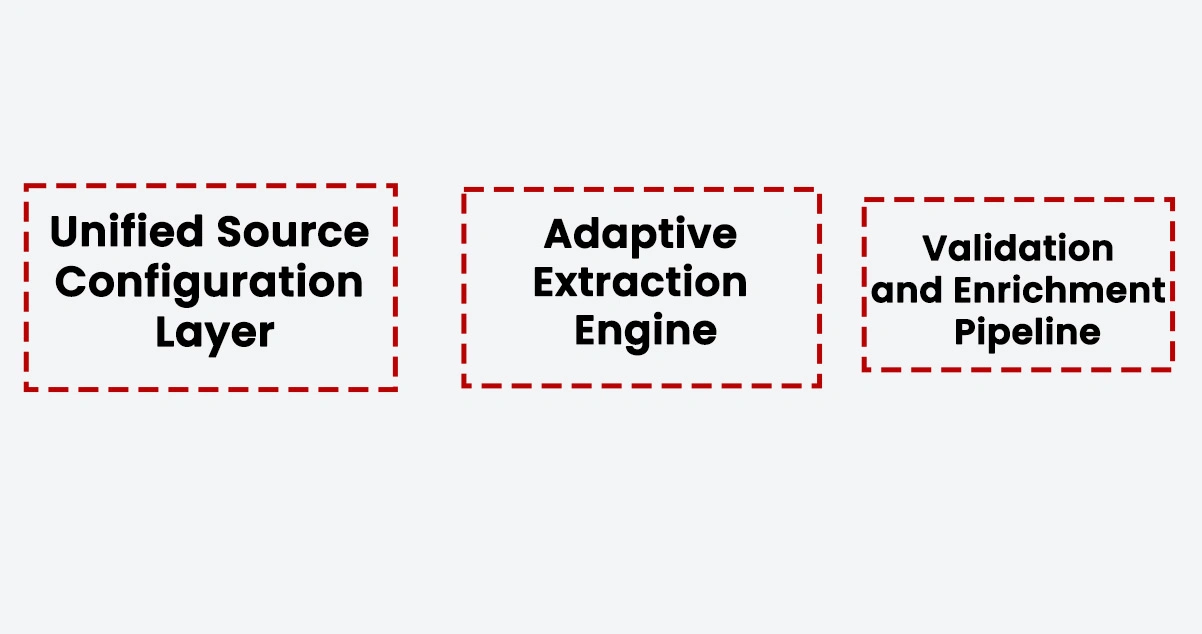
The deployment process followed a carefully phased approach that minimized disruption to the client's existing workflows while progressively introducing more powerful data capabilities.
- Unified Source Configuration Layer
Before extraction began, every target grocery platform was cataloged, profiled, and mapped to a standardized schema. This ensured that data pulled via Real-Time Grocery Inventory and Pricing API connections was immediately compatible with the client's analytics environment and could be ingested without transformation delays. - Adaptive Extraction Engine
The core extraction infrastructure was built to handle dynamic page structures, app-specific data formats, and anti-scraping protections. Built with redundancy and rotation protocols, the engine maintained continuous data flow even when source platforms underwent structural updates. - Validation and Enrichment Pipeline
Every dataset passing through the system was subject to automated quality checks that flagged anomalies, filled structural gaps, and enriched raw outputs with category tags, regional identifiers, and timestamp metadata.
Results & Impact
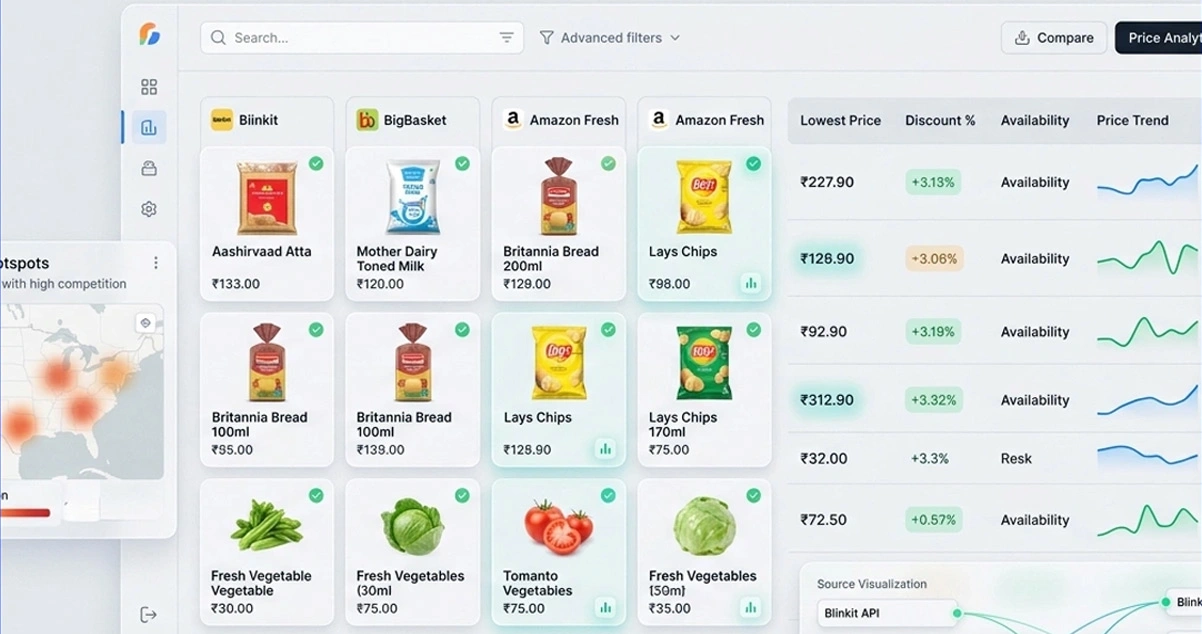
The implementation delivered tangible improvements across the client's analytics capabilities, workflow efficiency, and client satisfaction scores.
- Pricing Intelligence Depth
The client's analysts gained access to granular, item-level pricing data across all monitored platforms in near real time. This dramatically improved the depth and accuracy of pricing reports delivered to grocery retail clients, reinforcing the firm's reputation as a reliable intelligence partner. - Competitive Monitoring Efficiency
By fully automating Grocery Competitor Price Monitoring via API, the team redirected over sixty percent of previously manual data-gathering hours toward higher-value analytical tasks, resulting in faster turnaround on strategy briefs and market assessments. - Regional Strategy Precision
With access to consistently structured, location-tagged pricing and availability data, regional managers could finally develop market-specific recommendations grounded in actual shelf-level intelligence rather than aggregated national averages or anecdotal observations. - Scalable Intelligence Delivery
The pipeline architecture proved capable of scaling alongside the client's growing roster of grocery retail customers, adding new data sources and regional markets without requiring proportional increases in operational headcount or infrastructure investment.
Key Highlights
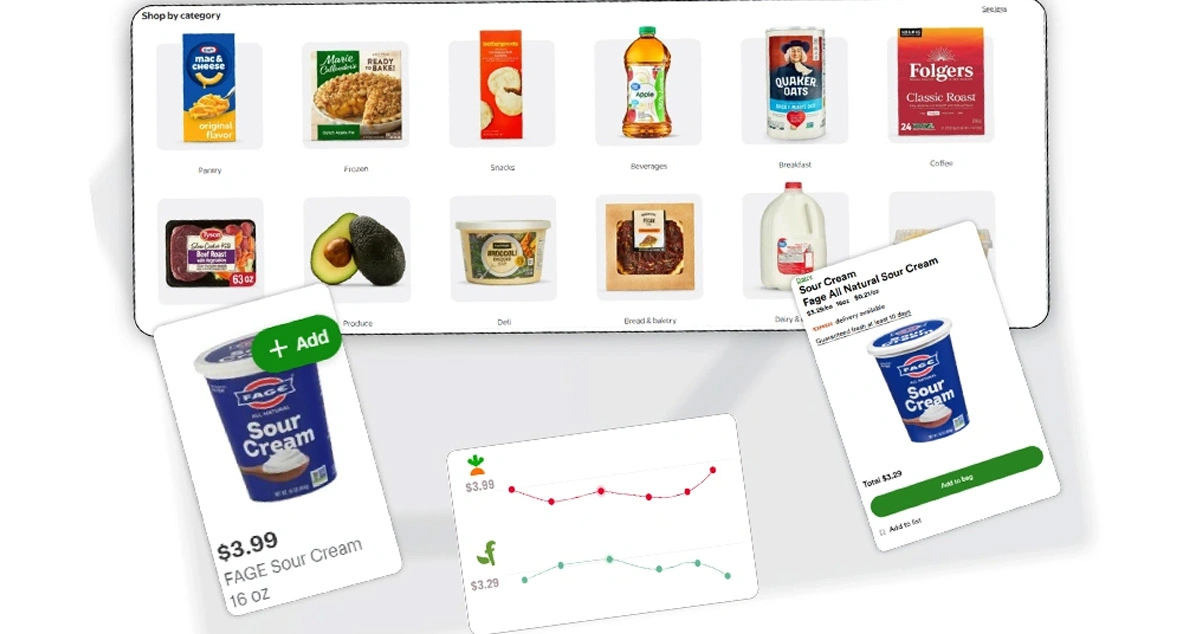
- Continuous Pricing Visibility
Our ability to Extract Grocery Pricing Intelligence API for Retailers in a continuous, automated manner meant the client always had access to the most current pricing landscape, eliminating the lag that had previously undermined the timeliness of their market reports. - Comprehensive Category Coverage
By deploying Grocery Data Scraping for Price Comparison Engines across fresh produce, packaged goods, beverages, and household categories, the client achieved a holistic view of the competitive pricing environment across the grocery spectrum. - Reliable API-Driven Data Infrastructure
The Real-Time Grocery Inventory and Pricing API backbone ensured that every data point was delivered in a structured, consistent format, reducing the overhead associated with data transformation and enabling faster analytical workflows across the team.
Use Cases
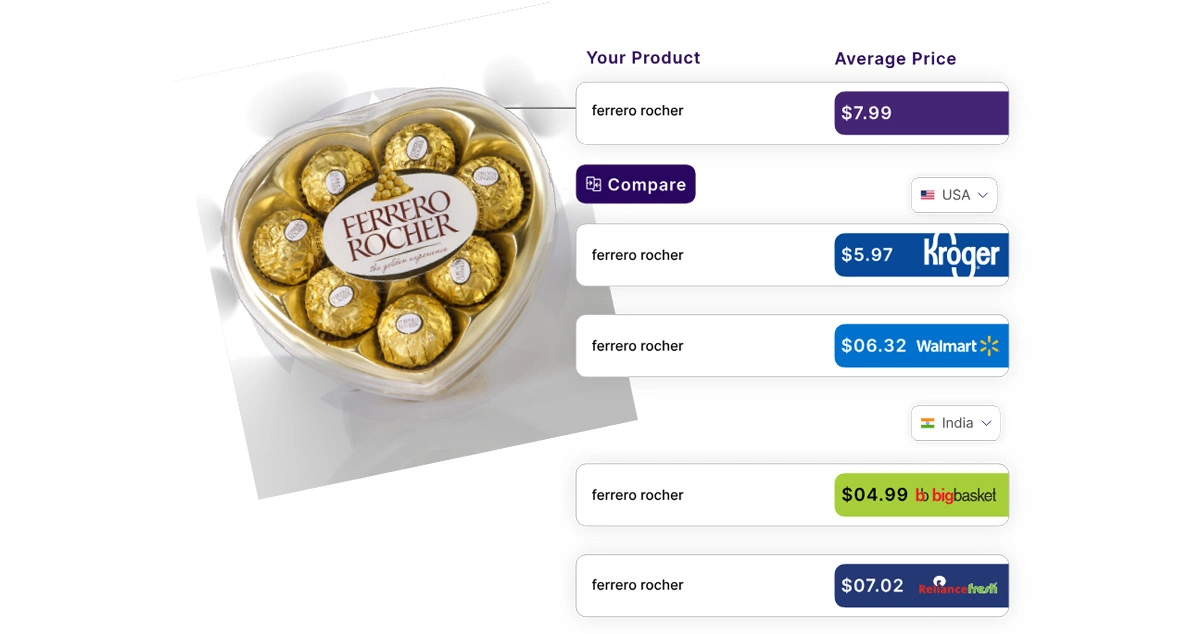
- Competitive Benchmarking at Scale
Strategy teams at grocery retail firms can use the extracted data to continuously measure their pricing position against key competitors, identify gaps, and adjust promotional pricing with confidence rather than guesswork. - Dynamic Price Adjustment Planning
The Price Optimization Service equips category managers with the real-time pricing signals needed to design responsive promotional calendars, minimize margin erosion, and capitalize on competitor pricing weaknesses during high-traffic retail periods. - Assortment and Availability Planning
Retail planners can leverage structured availability data to identify regional stockout patterns, optimize SKU distribution, and ensure shelf-level alignment with actual consumer demand across different geographic clusters. - New Market Entry Intelligence
Businesses evaluating expansion into new grocery markets or urban zones can use Real-Time Grocery Price Comparison for Analytics Using API Data to benchmark local pricing norms, map out category-level competition, and build realistic market entry pricing models.
Client’s Testimonial

Partnering with Mobile App Scraping gave our analytics team the kind of data infrastructure we had been trying to build internally for years. The accuracy and speed of the Real-Time Grocery Price Comparison for Analytics Using API Data pipeline transformed how we deliver insights to our grocery retail clients. The platform's ability to Extract Grocery Pricing Intelligence API for Retailers has become central to how we serve our clients every day.
– Marcus Delwyn, Head of Retail Intelligence
Conclusion
Retail analytics in the grocery sector is only as strong as the data powering it. Real-Time Grocery Price Comparison for Analytics Using API Data gives retail businesses the operational edge they need to respond to market dynamics with speed and precision rather than react after the damage is done.
For firms serious about transforming how they approach pricing intelligence, Grocery Data Scraping for Price Comparison Engines provides the structured, scalable data foundation that modern retail strategy demands. Contact Mobile App Scraping today to discover how our API-driven data solutions can elevate your retail analytics capabilities.