How Can Real-Time Grocery Price Tracking Using Quick Commerce APIs Track Grocery Inflation Faster?
Introduction
Grocery prices can change rapidly across fast-delivery platforms, making traditional inflation measurement slower and less responsive. Real-Time Grocery Price Tracking Using Quick Commerce APIs helps businesses collect current product prices, compare fluctuations, and identify category-level movements before delayed market reports reveal meaningful changes across grocery segments.
Quick-commerce platforms continuously update prices based on location, demand, promotions, availability, and inventory conditions. Quick Commerce App Data Extraction enables businesses to collect structured information from these changing catalogs and examine price movements across multiple products, brands, and delivery platforms with greater consistency and frequency.
Using automated data collection also reduces the effort required for repeated manual checks. Businesses can monitor price changes at product and category levels, identify unusual increases, and evaluate promotional effects. This approach supports faster inflation analysis while creating a reliable historical dataset for comparing grocery pricing patterns over time.
Measuring Grocery Inflation Through Frequent Price Signals
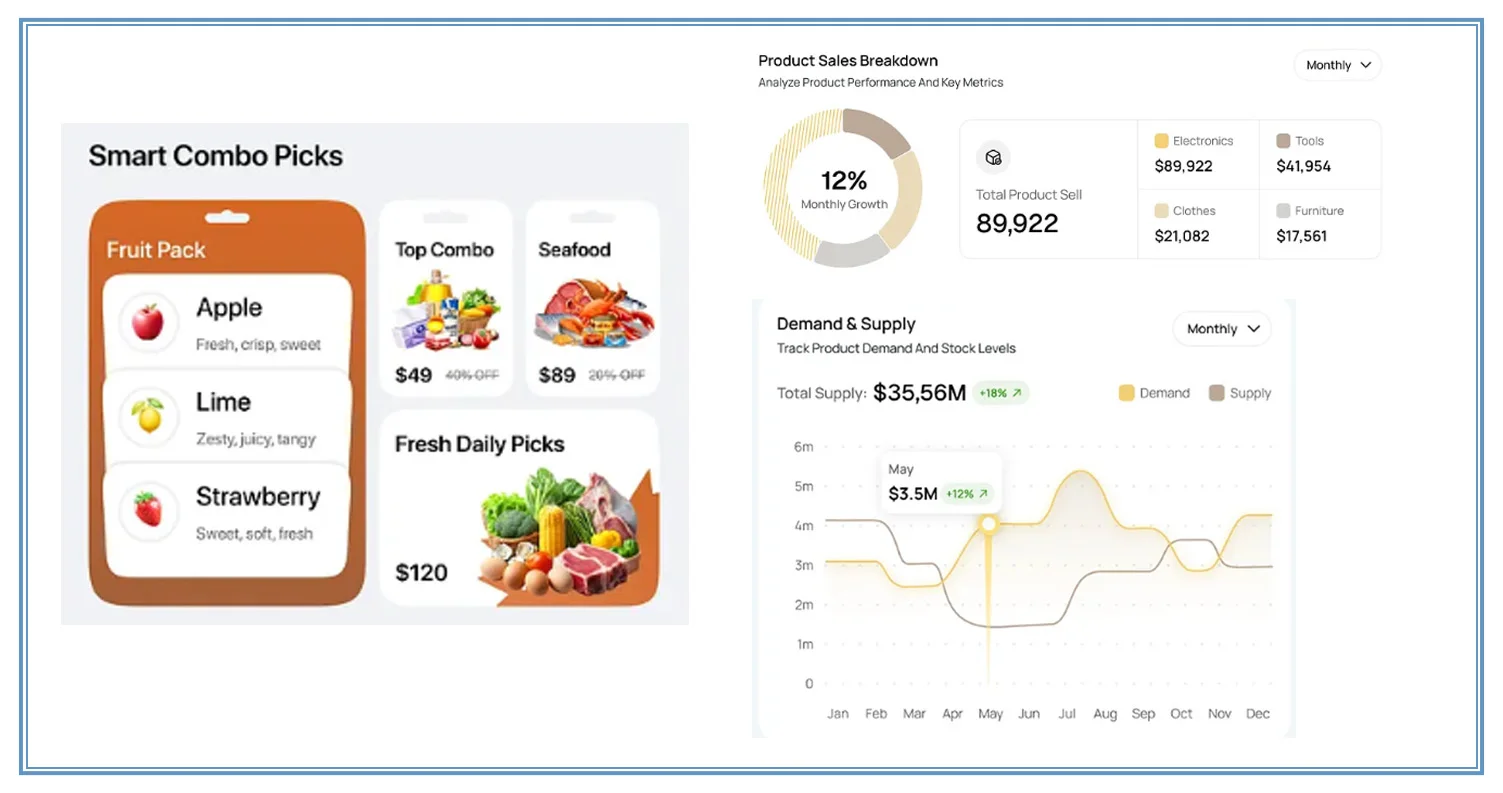
Grocery inflation monitoring requires frequent observations because prices can change multiple times within short periods. Businesses can establish automated collection schedules and compare product-level information at consistent intervals. How to Track Grocery Price Inflation With APIs becomes practical when price, package size, brand, discount, and availability information are captured in a standardized structure.
A Grocery Data Extraction API can organize these changing fields into datasets suitable for repeated analysis. Analysts can calculate percentage variations, compare current and previous prices, and identify categories experiencing sustained increases. Consistent collection also reduces gaps caused by occasional manual checks.
Several indicators can be monitored together to provide stronger context around price movements. These include:
- Current and previous product prices
- Discount and promotional information
- Product pack sizes and quantities
- Brand and category classifications
- Availability and stock-related information
Businesses can use Quick Commerce APIs for Grocery Price Monitoring for Data Insights to compare pricing behavior across multiple delivery platforms and locations. This makes it easier to distinguish short-term promotional adjustments from broader movements affecting grocery categories.
| Tracking Area | Analytical Purpose |
|---|---|
| Product pricing | Measures price movement |
| Discounts | Identifies promotional changes |
| Pack information | Supports normalized comparisons |
| Categories | Enables segment-level analysis |
| Availability | Provides supply context |
Frequent observations create a stronger historical foundation for identifying emerging grocery inflation patterns and evaluating how quickly prices respond to market conditions.
Connecting Product-Level Changes With Market Pricing Patterns
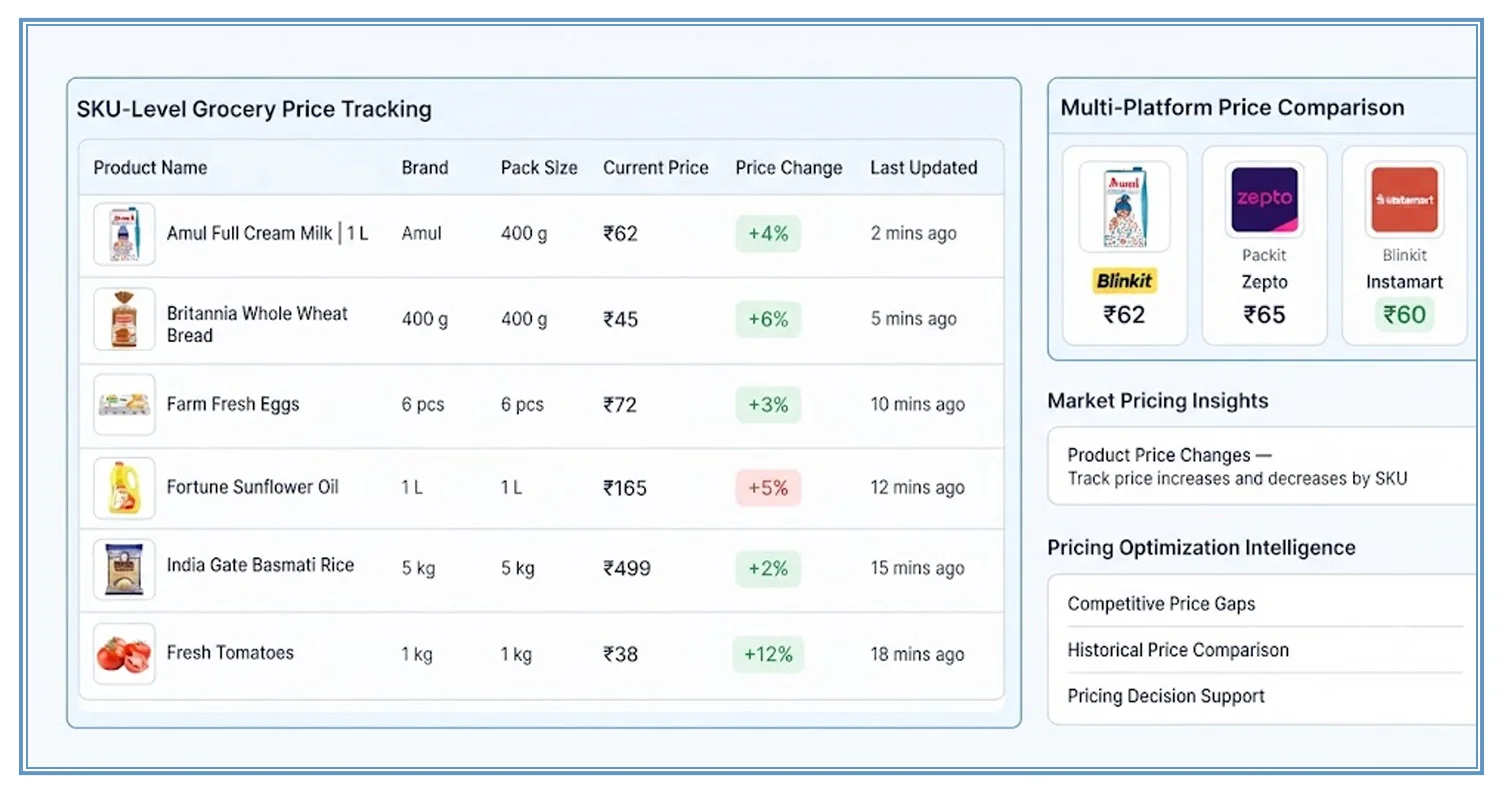
Product-level monitoring provides greater clarity when grocery inflation varies between brands, categories, locations, and delivery platforms. Businesses can compare the same products repeatedly while recording price differences and promotional activity. This creates a consistent dataset for understanding how individual changes contribute to wider market pricing patterns.
A structured pricing workflow can support SKU-Level Grocery Price Inflation Tracking for Data Extraction by preserving information such as product names, pack quantities, brands, prices, and timestamps. Maintaining these attributes allows analysts to compare equivalent products rather than relying only on broad category averages.
Pricing intelligence can also support commercial decisions when competitors adjust their prices frequently. A Price Optimization Service can use historical observations to evaluate competitive price gaps, promotional frequency, and changes across different market locations. Businesses can then assess pricing decisions using current and historical evidence.
Important analysis areas include:
- Comparing identical products across platforms
- Monitoring recurring promotional patterns
- Measuring regional price differences
- Tracking brand-level pricing movements
- Identifying unusual price adjustments
| Comparison Area | Business Application |
|---|---|
| Brands | Evaluates competitive positioning |
| Platforms | Identifies pricing differences |
| Locations | Measures regional variations |
| Promotions | Assesses discount behavior |
| Historical records | Identifies recurring trends |
Combining these signals helps businesses understand whether a price movement represents an isolated adjustment or contributes to a broader inflationary pattern across grocery markets.
Building SKU-Level Evidence For Faster Inflation Analysis
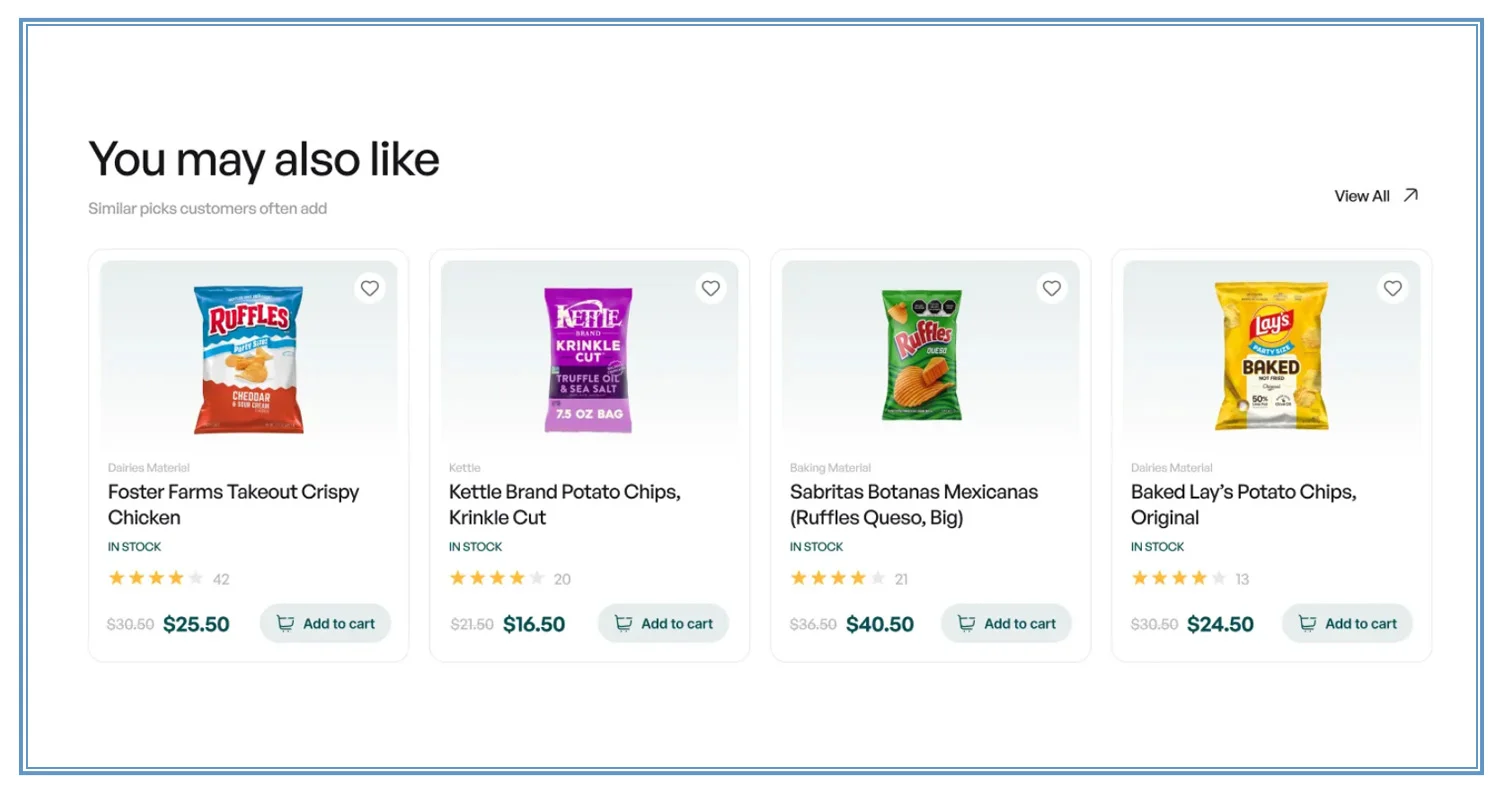
Granular grocery data becomes particularly useful when businesses need to understand inflation at the individual product level. Monitoring specific SKUs consistently allows analysts to compare equivalent products over time while accounting for pack sizes, brands, categories, and availability conditions.
With SKU-Level Grocery Price Inflation Tracking for Data Extraction, businesses can create historical records for individual products and calculate changes between collection periods. This approach helps identify products experiencing repeated increases, temporary discounts, or irregular price movements that may be hidden within broader category averages.
Additional consumer signals can provide context around changing grocery prices. Review and Rating Data Scraping can help businesses examine customer feedback alongside product availability and pricing information. While reviews do not directly measure inflation, they can provide useful supporting context for understanding consumer responses to changing market conditions.
Businesses can organize these datasets around several useful indicators:
- Product-level price history
- Brand and category information
- Pack size and quantity
- Availability status
- Customer feedback signals
| Data Element | Analytical Role |
|---|---|
| SKU | Enables precise product tracking |
| Price history | Measures changes over time |
| Pack size | Supports fair comparisons |
| Brand | Enables brand-level analysis |
| Availability | Adds market context |
Consistent SKU monitoring provides detailed evidence for inflation analysis and allows businesses to identify meaningful changes across large grocery catalogs without depending exclusively on broad market averages.
How Mobile App Scraping Can Help You?
Businesses need dependable data pipelines when grocery prices change frequently across mobile applications and quick-commerce platforms. Real-Time Grocery Price Tracking Using Quick Commerce APIs can support automated monitoring by collecting structured pricing information at defined intervals and organizing it for analysis.
Our solutions can help businesses monitor multiple data points without relying on repetitive manual collection. Key capabilities include:
- Automated collection across multiple grocery applications
- Frequent monitoring of changing product prices
- Structured extraction of product and category information
- Historical storage for trend comparison
- Location-based collection for regional analysis
- Scalable processing across large product catalogs
These capabilities make it easier to identify unusual price movements, compare competing platforms, and maintain consistent historical records. Businesses can apply automated collection methods to examine pricing changes across multiple locations and product categories without creating separate manual workflows for each source.
Detailed historical datasets also support recurring analysis of promotions, product availability, and competitive pricing. Scraping Grocery Inflation Analysis via Quick Delivery App Data can further strengthen these workflows by organizing information from fast-delivery applications into comparable datasets for ongoing market assessment and inflation analysis.
Conclusion
Faster inflation measurement depends on timely, consistent, and granular pricing information. Real-Time Grocery Price Tracking Using Quick Commerce APIs gives businesses a practical framework for monitoring grocery prices, comparing platforms, and identifying changes across products and categories without waiting for periodic market updates.
Structured datasets can support deeper analysis of promotions, availability, SKU movements, and regional price differences. Businesses can also apply How to Track Grocery Price Inflation With APIs to establish repeatable monitoring workflows and strengthen ongoing market analysis. Contact Mobile App Scraping today to build reliable grocery pricing datasets and support faster, data-driven inflation monitoring.