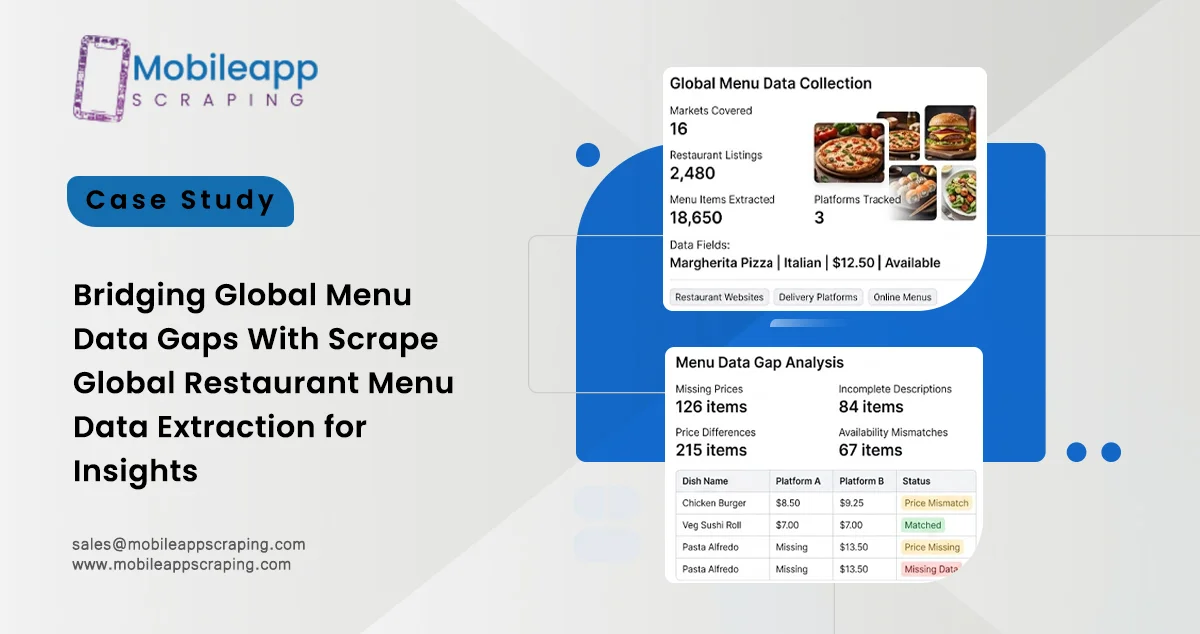
Introduction
Fragmented and inconsistent menu data across international markets continues to be one of the most persistent obstacles for food businesses trying to make informed, timely decisions. Brands operating across borders cannot afford to rely on incomplete information when developing pricing strategies or planning product rollouts in unfamiliar territories. Scrape Global Restaurant Menu Data Extraction for Insights has emerged as a foundational capability that helps organizations turn raw, scattered data into structured intelligence that fuels growth.
Today's food industry is shaped by a rapidly shifting customer base with diverse expectations depending on geography, culture, and digital platform preferences. Businesses that once depended on quarterly reports and manual surveys are now demanding real-time visibility into how competitors present, price, and promote their offerings. Through Multi-Country Restaurant Menu Data Collection, companies can now track evolving market behaviors with speed and accuracy that legacy methods simply cannot match.
What makes this capability genuinely transformative is its ability to surface patterns that would otherwise remain buried. When combined with Review and Rating Data Scraping, organizations gain a fuller picture of how menu items are perceived across different regions, helping them build strategies that go beyond price and into product experience. This positions data-driven businesses to lead in markets where precision and agility matter most.
The Client
A globally recognized food and beverage group with operations spanning across sixteen countries approached us with a specific challenge, their menu intelligence was scattered, inconsistent, and often weeks behind the actual market conditions. Their teams in different regions were using separate data sources, leading to conflicting reports and poor alignment on pricing and product strategy. They needed a centralized solution that would support Scrape Global Restaurant Menu Data Extraction for Insights at scale, without sacrificing accuracy or timeliness.
The organization had an ambitious roadmap for entering three additional markets within the coming year, which made it even more critical to build a strong intelligence foundation before those launches. Their marketing and category management teams needed granular visibility into how competitors were structuring their menus, what items were gaining traction, and how localized preferences varied across platforms. Restaurant Menu Monitoring Across International Food Delivery Platforms was identified as one of the highest-priority capabilities they needed to develop immediately.
Beyond competitive tracking, the client also wanted to understand pricing behavior in real time. They had experienced repeated setbacks where their menu pricing was either too aggressive or too conservative compared to local market standards, resulting in missed revenue opportunities. A reliable system for Multi-Market Restaurant Menu Data Extraction Solutions was essential to help their revenue and strategy teams act with confidence rather than guesswork across every market they served.
The Challenge
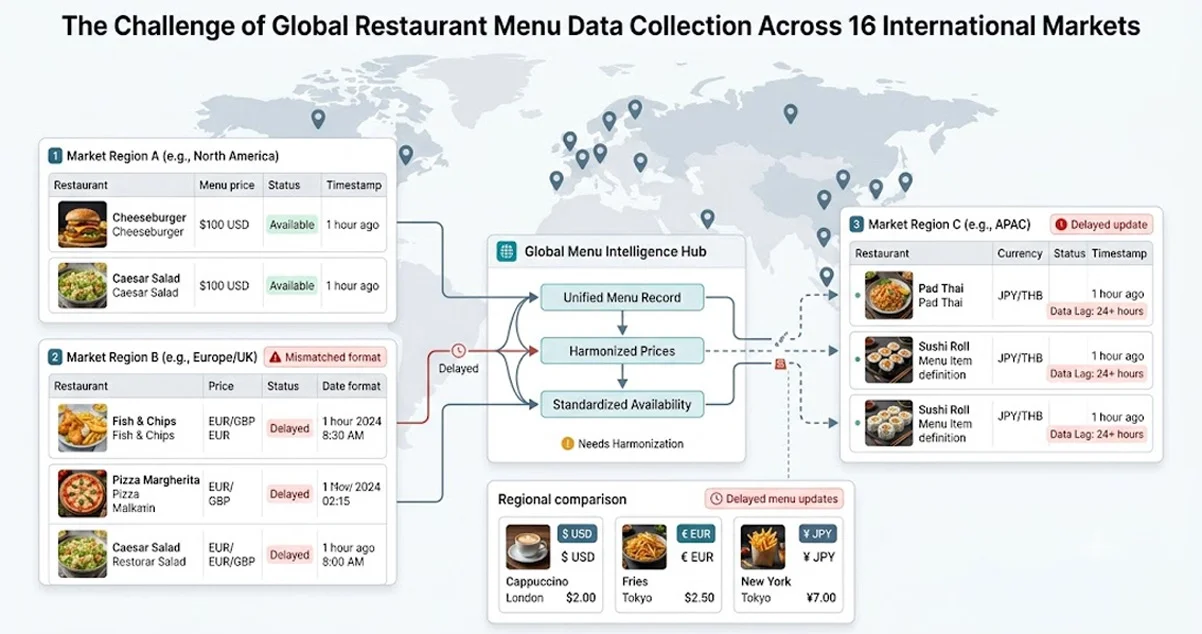
Operating across sixteen diverse markets meant the client was constantly dealing with data that arrived in different formats, through different channels, and at different speeds. The absence of a unified data infrastructure made it nearly impossible to draw meaningful comparisons across regions or act quickly when market conditions shifted.
Key challenges included:
- Disjointed data pipelines across international platforms prevented coherent cross-market analysis, limiting the effectiveness of Restaurant Menu Data Collection for Competitive Intelligence and slowing the client's ability to respond to competitor pricing shifts in real time.
- Existing monitoring tools lacked the capability to capture live menu changes on third-party delivery platforms, making it difficult to implement reliable Restaurant Menu Monitoring Across International Food Delivery Platforms across the organization's full geographic footprint.
- Regional teams operated in silos, relying on manual methods that introduced errors and delays into the decision-making process, ultimately weakening the quality of strategic insights across key markets.
- Scaling the data operation to cover new markets ahead of the planned expansion required an architecture that current internal tools could not support, creating urgent demand for Multi-Country Restaurant Menu Data Collection that worked seamlessly at enterprise scale.
The Solution
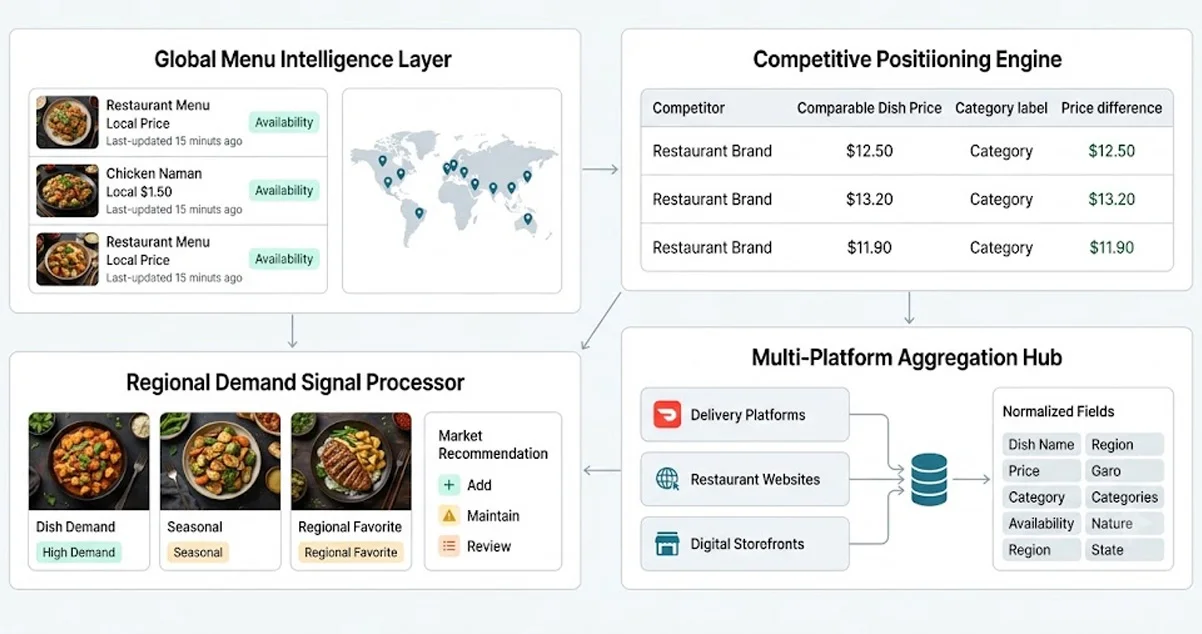
Our team designed a comprehensive, modular intelligence framework tailored specifically to the client's cross-market complexity and long-term scalability needs.
- Global Menu Intelligence Layer
A centralized extraction architecture that continuously captures structured menu data from restaurant listings across delivery apps, brand websites, and digital storefronts in all sixteen markets, forming the backbone of the entire data strategy and ensuring zero-gap coverage across regions. - Competitive Positioning Engine
Built to support full-spectrum market analysis, this module incorporates Web Scraping Services and Competitive Benchmarking Services to track item-level pricing, category placement, and menu structure changes across hundreds of competitor profiles, delivering daily-updated competitive snapshots to strategy teams. - Regional Demand Signal Processor
An intelligent pattern recognition system that classifies menu items by performance potential, regional relevance, and seasonal behavior, enabling the client's product team to make confident recommendations for market-specific additions and removals. - Multi-Platform Aggregation Hub
A unified data collection layer designed specifically to handle the structural variation between different international food delivery platforms, normalizing raw inputs into clean, comparable datasets that feed directly into the client's internal reporting and planning systems.
Implementation Process

Execution followed a structured, phased approach that prioritized data reliability, system stability, and rapid integration with the client's existing tools.
- Foundation Mapping and Source Configuration
Every active menu data source across the sixteen markets was identified, categorized, and validated. Extraction protocols were individually calibrated per platform to ensure Multi-Market Restaurant Menu Data Extraction Solutions functioned without disruption across all environments. - Automated Validation and Enrichment Pipeline
Raw data passed through a multi-step quality assurance pipeline where items were verified, duplicates removed, and missing fields enriched through cross-source matching. This process guaranteed that Restaurant Menu Data Collection for Competitive Intelligence produced clean, analysis-ready outputs consistently. - Real-Time Dashboard Integration
Processed intelligence was delivered directly to the client's business intelligence environment through API connections, giving regional leads and category managers instant access to live menu performance data and competitive trend summaries.
Results & Impact
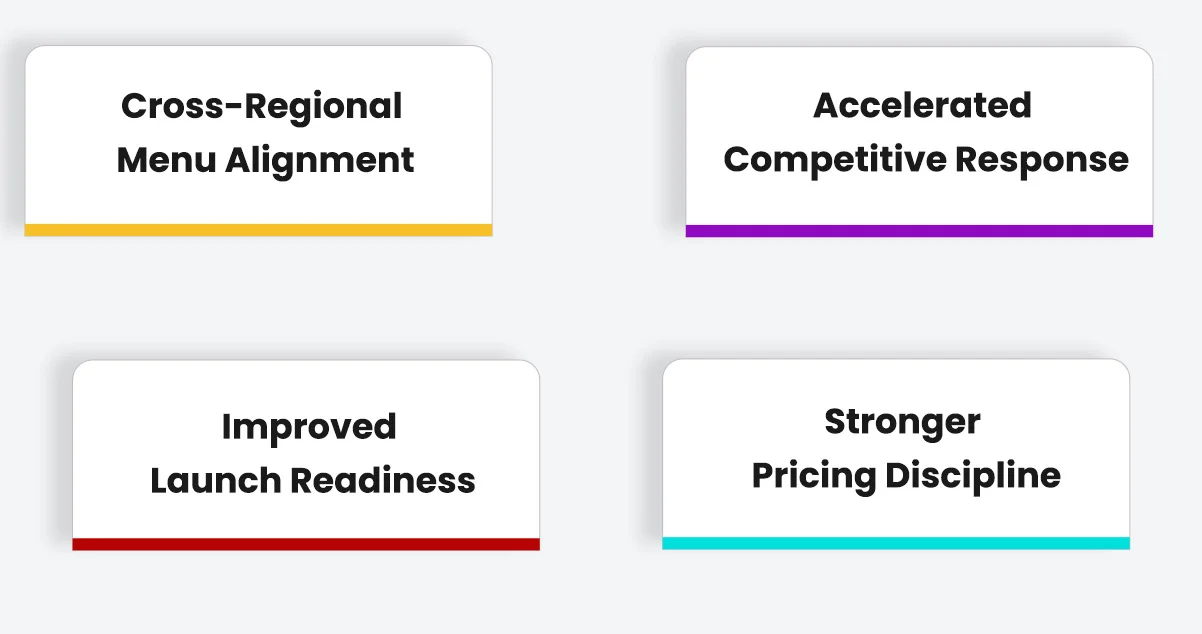
The deployment produced measurable improvements across the client's most critical operational and strategic areas within the first quarter of full implementation.
- Cross-Regional Menu Alignment
Teams across all sixteen markets began working from a single, consistent data source for the first time, dramatically reducing internal misalignment and improving the quality of regional strategy proposals through dependable Multi-Country Restaurant Menu Data Collection. - Accelerated Competitive Response
With live competitor menu updates feeding directly into dashboards, the client reduced their average response time to competitor pricing changes from several days to under twenty-four hours, strengthening their position in high-competition urban markets. - Improved Launch Readiness
The intelligence framework gave the expansion team a clear picture of local menu standards and pricing norms in the three new markets, resulting in more accurate initial menu configurations and stronger early performance after launch. - Stronger Pricing Discipline
By integrating continuous monitoring through Restaurant Menu Monitoring Across International Food Delivery Platforms, the revenue team identified fifteen pricing misalignments that were quietly costing the brand margin across five key markets, all of which were corrected within the first month.
Key Highlights
- Unified Global Data Coverage
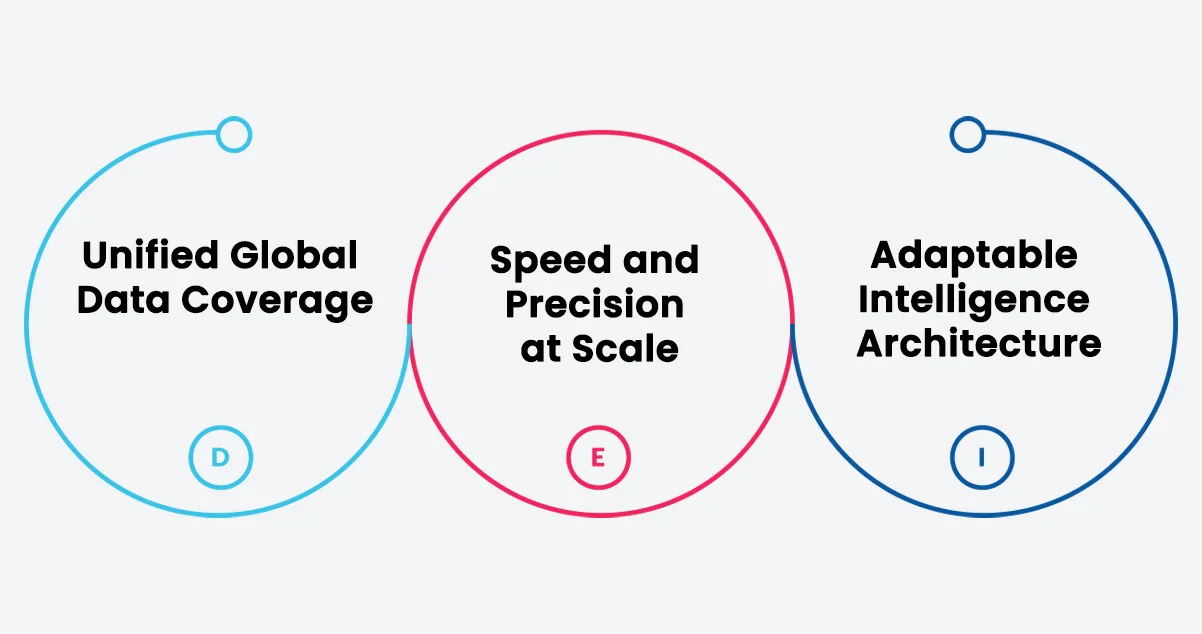
Full-spectrum extraction across sixteen international markets delivered structured, location-specific intelligence that allowed leadership to evaluate Multi-Market Restaurant Menu Data Extraction Solutions without relying on fragmented or delayed inputs from regional teams. - Speed and Precision at Scale
Continuous monitoring and automated validation ensured that live pricing and menu availability changes were captured with minimal lag, making Restaurant Menu Data Collection for Competitive Intelligence accurate enough to support daily strategic decisions. - Adaptable Intelligence Architecture
The modular framework was designed to expand alongside the business, supporting the addition of new markets, platforms, and data types without requiring full system rebuilds, ensuring long-term value as the client's footprint continues to grow.
Use Cases
Organizations across the food and beverage industry can apply this intelligence model to a wide range of strategic and operational functions.
- Localized Menu Development
Brand and product teams can draw on structured cross-market data to identify which item categories perform well in specific geographies, allowing for menu design choices that reflect real regional demand rather than assumptions based on home-market success. - Pricing Strategy Refinement
Category managers can apply Pricing Intelligence Data Scraping to evaluate how competitors' structure tiered pricing across markets, enabling the development of pricing architectures that are both locally competitive and globally consistent for the brand. - Platform Performance Benchmarking
Operations teams can assess how their menu presentation compares to competitors on individual delivery platforms across different countries, using the insights to optimize positioning, imagery descriptions, and item sequencing for maximum visibility. - Expansion Planning and Risk Reduction
Strategy and market entry teams can evaluate competitive density, price sensitivity, and category demand in prospective markets before committing to expansion, turning a typically high-risk decision into one grounded in concrete, current data.
Client's Testimonial

Working with Mobile App Scraping gave our organization the clarity we had been missing for years. The ability to Scrape Global Restaurant Menu Data Extraction for Insights across every market we operate in fundamentally changed how our teams approach product and pricing decisions. The solution scaled with us and continues to deliver consistent value as we grow into new territories. What impressed us most was how reliably the system handled Multi-Market Restaurant Menu Data Extraction Solutions across such a diverse set of platforms and geographies.
– Dominic Ferreira, Vice President of Global Menu Strategy
Conclusion
In an industry where margins are tight and consumer preferences can shift without warning, access to accurate and timely menu intelligence is no longer optional, it is foundational to sustainable growth. The ability to Scrape Global Restaurant Menu Data Extraction for Insights across multiple markets simultaneously gives organizations a strategic edge that compounds over time, turning each data point collected into a building block for smarter product development, sharper pricing, and stronger market entry planning.
Through consistent application of Multi-Country Restaurant Menu Data Collection, businesses can move from reactive to proactive in how they track and respond to the competitive landscape, ensuring that every market they serve is treated with the same level of intelligence and attention it deserves. Contact Mobile App Scraping today to learn how our international menu data solutions can support your expansion goals, refine your pricing strategy, and bring true clarity to your competitive monitoring efforts.