Introduction
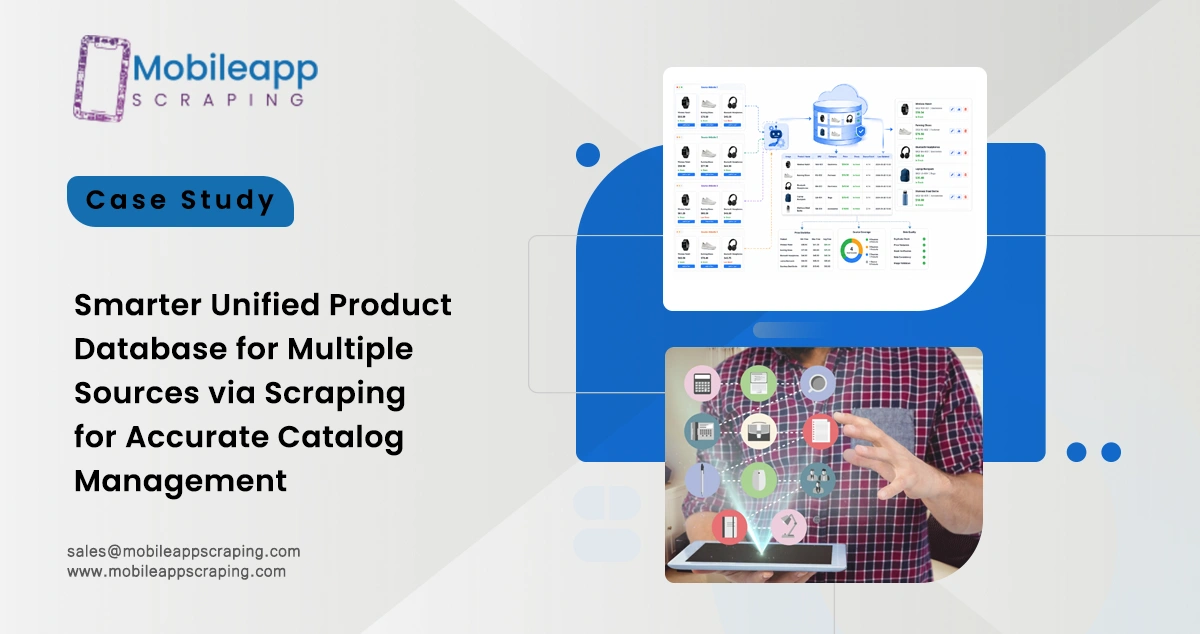
Managing product information across dozens of platforms has become one of the most persistent operational headaches for modern retailers and distributors. Fragmented listings, duplicate entries, and inconsistent product attributes make accurate catalog management nearly impossible without a structured data strategy. A Unified Product Database for Multiple Sources via Scraping addresses this problem by centralizing all product intelligence into one reliable, queryable repository that supports smarter business decisions.
Today's catalog management demands more than manual updates and spreadsheet patches. Brands that integrate Web Scraping Product Catalogs From Multiple Marketplaces into their workflows gain a clearer view of how their products appear, compete, and perform across different channels simultaneously. This level of visibility transforms raw, scattered listings into structured, actionable data that directly informs pricing, product development, and distribution planning.
Modern extraction pipelines now use Web Scraping With AI to improve data classification, detect anomalies, and auto-fill missing attributes with greater accuracy than traditional rule-based tools. When catalog teams combine smart automation with intelligent validation layers, the outcome is a product database that stays synchronized, complete, and business-ready across every connected source.
The Client
A rapidly growing e-commerce distribution company specializing in consumer electronics and home essentials came to us seeking a smarter approach to catalog management. Their product portfolio spanned thousands of SKUs sourced from multiple suppliers, manufacturer portals, and third-party marketplaces. The growing complexity of managing these listings manually was creating expensive inconsistencies across their sales channels. A reliable Unified Product Database for Multiple Sources via Scraping was essential to bringing structure and clarity to their entire catalog operation.
The client had invested heavily in building a strong supplier network, but that same network created data fragmentation challenges. Each vendor delivered product information in a different format, with different naming conventions, attribute structures, and update frequencies. Unified Product Catalog Management and Scraping became their strategic priority, as they needed a single source of truth that could reflect real-time changes across all supplier inputs without requiring constant manual reconciliation.
Their internal teams were spending significant hours each week attempting to merge product feeds, resolve conflicts between supplier data and marketplace listings, and chase down missing specifications. The client needed a partner who could build a scalable, automated solution that would free their merchandising teams to focus on strategy rather than data cleanup. Combine Product Data Scraping was identified as the core capability required to power their catalog transformation journey.
The Challenge

The client's catalog operations faced multi-layered obstacles rooted in data inconsistency, limited automation, and insufficient cross-platform visibility.
- Fragmented Supplier Data Pipelines
Each supplier delivered product feeds through different channels FTP exports, spreadsheets, and brand portals with no standardized schema. The absence of Product Data Unification via Scraping meant teams manually reconciled thousands of attribute conflicts weekly, introducing errors that cascaded into live product listings and damaged customer trust. - Absence of Real-Time Catalog Synchronization
Market-ready catalogs require continuous synchronization, but the client's existing tools lacked the infrastructure to handle live updates. Without API Scraping capabilities integrated into their pipeline, changes in pricing, availability, or product specifications from suppliers often took days to reflect in their active listings, creating costly mismatches. - Poor Data Quality Across Category Layers
Duplicate entries, missing dimensions, inconsistent brand names, and non-standardized attribute labels degraded catalog quality at scale. Teams had no automated mechanism to Clean and Normalize Product Data Scraping From Multiple Sources, forcing analysts into tedious manual reviews that slowed product launch timelines significantly. - Lack of Cross-Marketplace Visibility
The client operated on several marketplaces simultaneously but had no unified dashboard to monitor listing accuracy across all of them. Inconsistencies between platform-specific listings went undetected, eroding brand credibility and causing conversion losses across key digital storefronts.
The Solution

We engineered a modular, intelligent catalog management infrastructure designed to unify, validate, and activate product data at enterprise scale.
- Catalog Aggregation Layer
A multi-source ingestion engine built to extract structured and unstructured product information from supplier portals, brand websites, and marketplace feeds. This layer applies Unify Product Information From Different Sources via Scraping logic to standardize incoming data before it enters the central repository, ensuring every SKU arrives clean and categorized. - Dynamic Extraction Engine
This component powers continuous, scheduled extraction using Scrape Enterprise App Crawling Data techniques to reach product data locked within app-based portals and dynamic JavaScript-rendered pages. It handles session management, pagination, and anti-bot navigation automatically, ensuring uninterrupted data flow. - Attribute Normalization Framework
Once raw data is ingested, the normalization engine maps diverse attribute sets to a master taxonomy. Product titles, categories, dimensions, and specifications are standardized using rule-based and AI-assisted classification, making every record compatible with the client's internal catalog structure and marketplace submission requirements. - Conflict Resolution and Validation Module
Before records enter the live database, a multi-point validation layer cross-checks data accuracy, flags duplicates, and resolves attribute conflicts using configurable business rules. This ensures that only verified, publication-ready product records are promoted to the active catalog environment.
Implementation Process

The project was executed through a phased rollout that prioritized data integrity, system stability, and team adoption.
- Source Mapping and Connector Build
Our team conducted a thorough audit of all existing supplier data sources, marketplace APIs, and internal systems. Individual connectors were then built for each source type, establishing reliable, authenticated pipelines that feed into the central Unified Product Catalog Management and Scraping repository without gaps or redundancy. - Taxonomy Design and Attribute Alignment
A master product taxonomy was developed in collaboration with the client's merchandising team. This taxonomy served as the reference framework for all normalization and classification activities, ensuring that Web Scraping Product Catalogs From Multiple Marketplaces output aligned perfectly with internal catalog standards and marketplace category requirements. - Pipeline Automation and Scheduling
Extraction jobs were configured with intelligent scheduling logic based on source update frequencies. High-priority supplier feeds were set to refresh every few hours, while lower-frequency sources followed daily cycles. All jobs were monitored through a centralized orchestration dashboard with automated alerts for failures or data anomalies.
Results & Impact

The solution delivered measurable improvements in catalog accuracy, team productivity, and marketplace performance.
- Catalog Accuracy Transformation
By implementing automated extraction and normalization, the client reduced product data errors by a substantial margin. The ability to Clean and Normalize Product Data Scraping From Multiple Sources eliminated the majority of duplicate records and attribute mismatches, resulting in a significantly cleaner, more trustworthy product catalog across all active channels. - Accelerated Product Launch Cycles
With supplier feeds updating automatically and attribute mapping handled by the normalization framework, new product onboarding time dropped considerably. Merchandising teams could push verified listings to marketplaces in hours rather than days, improving responsiveness to new inventory arrivals and seasonal catalog expansions. - Unified Cross-Platform Listing Consistency
The Combine Product Data Scraping infrastructure ensured that product information remained synchronized across all connected marketplaces. Discrepancies between platform-specific listings were flagged and resolved automatically, strengthening brand credibility and improving customer experience at every digital touchpoint. - Operational Efficiency and Resource Reallocation
Manual data reconciliation efforts were reduced dramatically, freeing catalog analysts from repetitive cleanup tasks. The hours recovered were redirected toward higher-value activities such as competitive analysis, category strategy, and new supplier onboarding directly contributing to business growth.
Key Highlights

- Scalable Multi-Source Architecture
The solution's modular design supports seamless addition of new data sources without disrupting existing pipelines. Product Data Unification via Scraping capabilities scale horizontally as the client's supplier network and marketplace presence continues to expand. - Intelligent Normalization at Scale
Automated attribute mapping and conflict resolution reduce the manual effort required to maintain catalog quality. Unify Product Information From Different Sources via Scraping processes handle thousands of SKUs simultaneously with consistent output quality across every product category. - Real-Time Catalog Synchronization
Continuous extraction schedules ensure the product database reflects the latest supplier and marketplace updates with minimal latency. This level of real-time alignment supports accurate inventory visibility, dynamic pricing decisions, and faster go-to-market execution across competitive categories.
Use Cases
The platform's capabilities extend across multiple business functions, delivering consistent value to catalog, merchandising, and strategy teams.
- Supplier Data Consolidation
Procurement and catalog teams can ingest, validate, and publish product data from dozens of suppliers through a single automated pipeline. The Unified Product Database for Multiple Sources via Scraping framework eliminates the need for manual feed reconciliation, accelerating supplier onboarding and reducing integration overhead across complex supply chains. - Marketplace Catalog Expansion
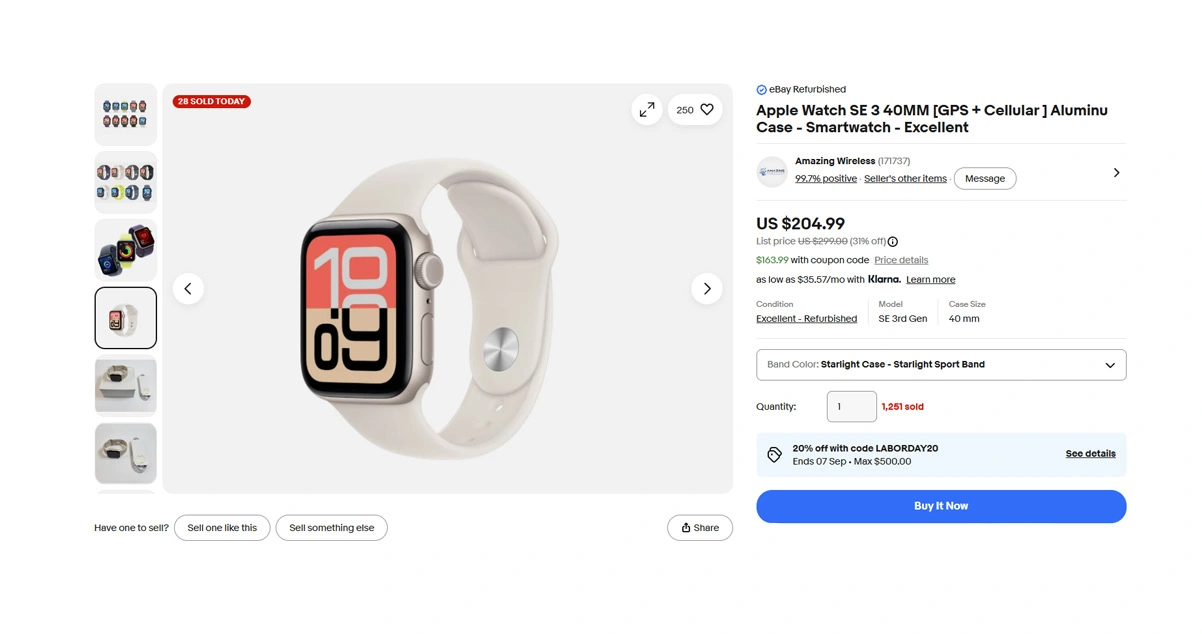
Growth teams exploring new marketplace opportunities benefit from Web Scraping Services that extract existing listing structures, category templates, and competitor attribute patterns from target platforms. This intelligence accelerates catalog preparation and improves listing quality from the very first product submission. - Competitive Product Benchmarking
Brand managers and pricing teams use extracted marketplace data to monitor competitor product positioning, attribute completeness, and pricing trends. Continuous benchmarking supports smarter assortment decisions and ensures the client's catalog remains competitive and well-differentiated across all active channels. - Category Expansion and Gap Analysis
Analytics teams leverage normalized catalog data to identify product gaps, underperforming categories, and emerging demand signals. Web Scraping Product Catalogs From Multiple Marketplaces delivers the category-level intelligence needed to prioritize assortment investments and guide new product development with precision.
Client's Testimonial

Before working with Mobile App Scraping, our catalog team was overwhelmed trying to reconcile product data from over forty different sources every week. The automated pipeline they built gave us a true Unified Product Database for Multiple Sources via Scraping that we could finally trust. Our listings are consistent, our launch cycles are faster, and our teams are focused on strategy instead of cleanup. It has been a transformative shift for our entire catalog operation. The solution exceeded every expectation we had going into the project.
– Marcus Delray, Head of Catalog Operations
Conclusion
Scaling a product catalog across multiple suppliers and marketplaces without a structured data strategy is a path toward growing inconsistency and operational strain. A reliable Unified Product Database for Multiple Sources via Scraping gives businesses the foundation they need to manage product information with precision, speed, and confidence at any scale.
As product ecosystems grow more complex, the ability to Product Data Unification via Scraping becomes a genuine competitive differentiator separating brands that react slowly to catalog changes from those that stay synchronized, accurate, and ready to grow.
Contact Mobile App Scraping today to discover how our intelligent catalog data solutions can eliminate fragmentation from your product operations. Our team brings deep expertise in multi-source extraction, attribute normalization, and catalog automation that translates directly into measurable business outcomes.