

Introduction
In an era where real-time intelligence defines competitive success, businesses across industries are confronted with a fundamental question: how should they access the digital data they need to make smarter decisions? Understanding the distinction between Web Scraping API vs Official API for Businesses is no longer a technical afterthought, it has become a core strategic consideration that directly influences how organizations shape product offerings, monitor competitors, and respond to shifting market dynamics.
The pressure to collect, process, and act on market signals faster than ever before has made data infrastructure a boardroom-level priority. With Web Scraping Services enabling access to publicly available information at scale, enterprises are no longer limited by what platforms choose to expose through official channels. Instead, they can build custom intelligence pipelines that reflect their specific operational and competitive needs across geographies and verticals.
This case study examines how a structured approach to understanding Web Scraping API for Business Data Collection helped a leading market analytics firm break through data accessibility barriers and build a scalable intelligence framework. The strategies applied, the challenges navigated, and the outcomes delivered offer practical lessons for any organization seeking to transform raw digital data into measurable business value.
The Client
A prominent market analytics firm with operations spanning North America and Southeast Asia approached us with a growing challenge around data accessibility and competitive monitoring. Their internal teams had long relied on a patchwork of official API integrations, but mounting restrictions and inconsistent data coverage were beginning to limit their analytical output. The decision to explore Web Scraping API vs Official API for Businesses as a framework for overhauling their data strategy marked a turning point.
The organization served a diverse client base that demanded granular, location-specific insights updated with high frequency. Leadership recognized that the ability to Extract Website Data Using a Web Scraping API would allow them to fill critical coverage gaps, expand the scope of their intelligence offerings, and reduce dependence on third-party platforms that frequently altered access conditions without notice.
Beyond access limitations, the firm also faced pressure to improve the freshness and accuracy of the datasets they delivered. Their analysts were spending disproportionate time reconciling incomplete information pulled from restricted official endpoints. By engaging with a solution built around Real-Time Web Scraping API for Enterprise Analytics, the firm aimed to redirect that analytical effort toward interpretation and insight generation rather than data troubleshooting and gap-filling.
The Challenge

The client encountered several interconnected obstacles that collectively undermined their ability to deliver consistent, high-quality intelligence to their enterprise customers.
- Data Access Restrictions
Official API endpoints from major platforms imposed strict rate limits and selective field exposure, preventing the client from retrieving the full breadth of publicly available market signals they needed. The inability to Scrape Public Website Data vs Use an Official API on their own terms left significant competitive blind spots across key product categories. - Coverage Fragmentation
Data sourced through official channels varied dramatically in scope and structure across different regional markets. This inconsistency made cross-market comparisons unreliable and forced analysts to invest hours in manual reconciliation work that delayed report delivery and reduced confidence in outputs. - Speed-to-Insight Deficit
The client’s existing infrastructure was not equipped to monitor pricing movements, product availability changes, or promotional activity in real time. Decision cycles at their enterprise clients were growing shorter, and the lag built into their current data collection approach was becoming a meaningful competitive liability. - Scalability Constraints
As the firm won new enterprise contracts and expanded their reporting scope, their existing API-dependent data collection model showed clear signs of strain. Adding new data sources required lengthy negotiation processes with platform providers, creating bottlenecks that slowed product development and new client onboarding.
The Solution
Our team designed a modular, enterprise-grade data intelligence infrastructure specifically built to address the scalability, coverage, and speed requirements the client presented.
- Adaptive Data Access Layer
This allowed the firm to pursue the most efficient path to data for each source without manual intervention, fully operationalizing the principle of Web Scraping API for Business Data Collection at enterprise scale. - Commerce Intelligence Extractor
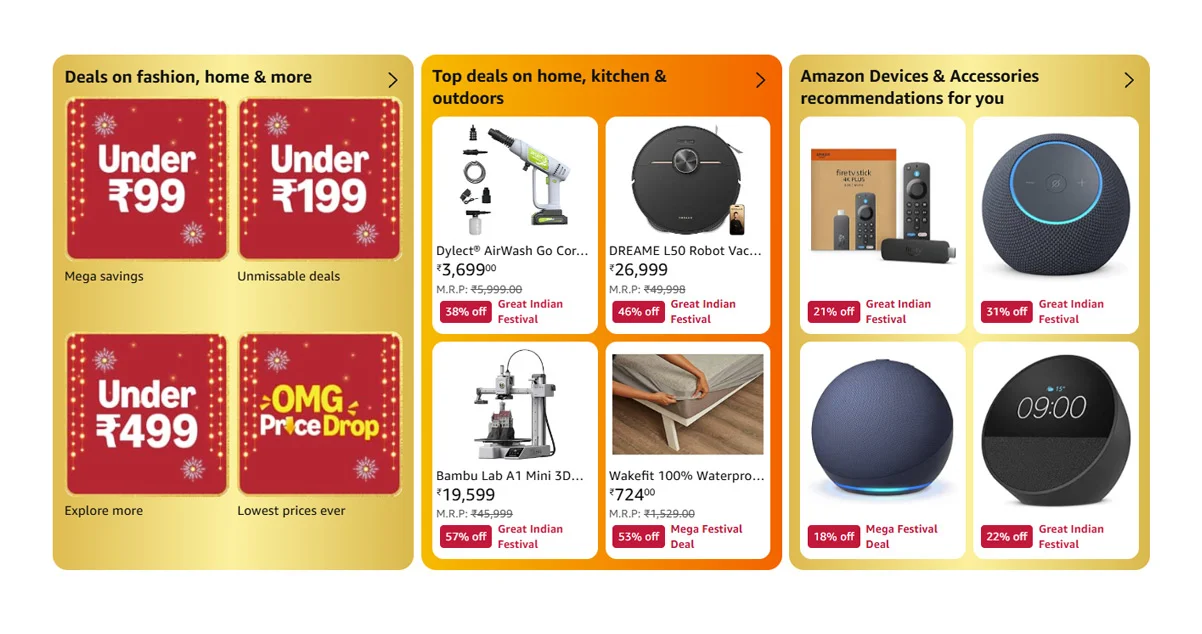
Built with E-Commerce App Scraping Services at its core, this component enabled structured retrieval of product listings, pricing tiers, promotional flags, and availability signals across hundreds of e-commerce platforms. The resulting E-Commerce Datasets were standardized, timestamped, and delivered in formats that integrated directly with the client’s existing reporting systems. - Competitor Signal Tracker
By applying intelligent change-detection algorithms, the system flagged meaningful shifts in pricing strategy, product launches, and content updates as they occurred, providing analysts with an immediate, actionable view of the competitive landscape. - Structured Validation Engine
All extracted data passed through a multi-stage quality assurance pipeline that applied schema validation, deduplication logic, and anomaly detection before delivery. This ensured that outputs maintained the accuracy and consistency standards required to support high-stakes enterprise reporting without additional manual review overhead.
Implementation Process

The deployment followed a phased methodology designed to minimize operational disruption while progressively expanding the scope of the client’s data intelligence capabilities.
- Source Mapping and Prioritization
Our team conducted a comprehensive audit of the client’s existing data sources, mapping each against their reporting requirements to identify gaps that needed to be addressed through Real-Time Web Scraping API for Enterprise Analytics integration. - Infrastructure Deployment and Configuration
Proxy management, request scheduling, and session handling were all configured to ensure reliable, continuous data flow without triggering platform-level access restrictions or disrupting normal site operations. - Integration and Normalization Pipeline
This pipeline was designed to support the ability to Scrape Public Website Data vs Use an Official API in a way that produced outputs indistinguishable in format from official channel data, preserving compatibility with downstream tools. - Testing, Calibration, and Handoff
Each data stream underwent a calibration period during which extraction accuracy was verified against known benchmarks. Analyst teams were trained on interpreting the new data outputs, and documentation was provided to support ongoing management and configuration of the system.
Results & Impact

The implemented solution delivered measurable improvements across data quality, operational efficiency, competitive responsiveness, and analytical output depth.
- Expanded Market Coverage
Coverage across previously underserved regional markets improved significantly, enabling analysts to produce reports that more accurately reflected the full competitive landscape and justify the transition away from restrictive API-only workflows. - Operational Efficiency Gains
Teams redirected that capacity toward higher-value interpretation and strategic recommendation work, improving both the depth and turnaround speed of client deliverables without requiring additional headcount. - Real-Time Competitive Responsiveness
Continuous monitoring of pricing movements, availability changes, and promotional activity gave enterprise clients access to intelligence that was hours ahead of what they had previously worked with. - Scalable Intelligence Infrastructure
Onboarding new enterprise clients with specialized data requirements became a configuration exercise rather than a multi-month integration project, accelerating revenue growth and reducing delivery costs simultaneously.
Key Highlights

- Intelligent Access Architecture
The solution demonstrated that understanding Web Scraping API vs Official API for Businesses is not an either-or decision, it is a design principle. By combining both approaches through adaptive routing logic, the client achieved maximum data coverage while maintaining compliance with source site terms. - Enterprise-Grade Data Reliability
The multi-stage validation pipeline ensured that data delivered to enterprise clients met accuracy standards that official API outputs alone had never consistently achieved. The ability to Extract Website Data Using a Web Scraping API at scale, with built-in quality controls, repositioned the firm as a premium intelligence provider in their market. - Continuous Competitive Intelligence
Real-time monitoring capabilities transformed how the firm’s enterprise clients approached market surveillance. Instead of periodic snapshots, they now operated with a continuous, live view of competitor behavior, a capability directly enabled by the platform’s Real-Time Web Scraping API for Enterprise Analytics foundation.
Use Cases

The intelligence infrastructure built for this client addresses a range of business scenarios applicable across industries and competitive contexts.
- Pricing Strategy Calibration
Retail and consumer goods teams can monitor competitor pricing across thousands of product listings in real time, enabling dynamic pricing decisions grounded in current market conditions rather than outdated periodic surveys. - Digital Commerce Market Mapping
Category managers and e-commerce strategists can apply insights drawn from a comprehensive E-Commerce Data Scraping Guide framework to map competitive product positioning, identify assortment gaps, and evaluate promotional strategies across major digital retail platforms with precision and consistency. - Enterprise Vendor Evaluation
Procurement and partnership teams can use structured market data to evaluate vendor pricing behavior, monitor service availability commitments, and benchmark supplier performance against industry peers, all without relying on self-reported data that may be selectively presented. - Product Launch Intelligence
Innovation and product development teams can track competitor product introductions, customer reception signals, and regional rollout patterns to inform their own launch timing and positioning strategies, giving them a significant first-mover intelligence advantage in fast-moving categories.
Client's Testimonial

Working with the Mobile App Scraping team fundamentally changed how we think about market intelligence infrastructure. The clarity they brought to evaluating Web Scraping API vs Official API for Businesses helped us move from a fragmented, reactive data collection model to a structured, proactive intelligence platform. The speed and coverage we have access to through this system, particularly the Web Scraping API for Business Data Collection capabilities, have become a genuine competitive differentiator for our enterprise client relationships.
– Diana Ellison, Head of Data Intelligence Strategy
Conclusion
The intelligence demands facing modern businesses are growing faster than official data channels are equipped to satisfy. Organizations that understand how to strategically navigate Web Scraping API vs Official API for Businesses will consistently outpace those that accept the limitations of restricted platform access as fixed constraints.
The ability to Extract Website Data Using a Web Scraping API gives businesses the operational flexibility to build intelligence pipelines tailored to their specific competitive needs, free from the field restrictions, rate limits, and selective exposure that characterize most official endpoints.
Contact Mobile App Scraping today to explore how our data intelligence infrastructure solutions can help your organization close critical market coverage gaps, accelerate decision-making, and build a scalable foundation for long-term competitive advantage.